 English
 русский
 Español
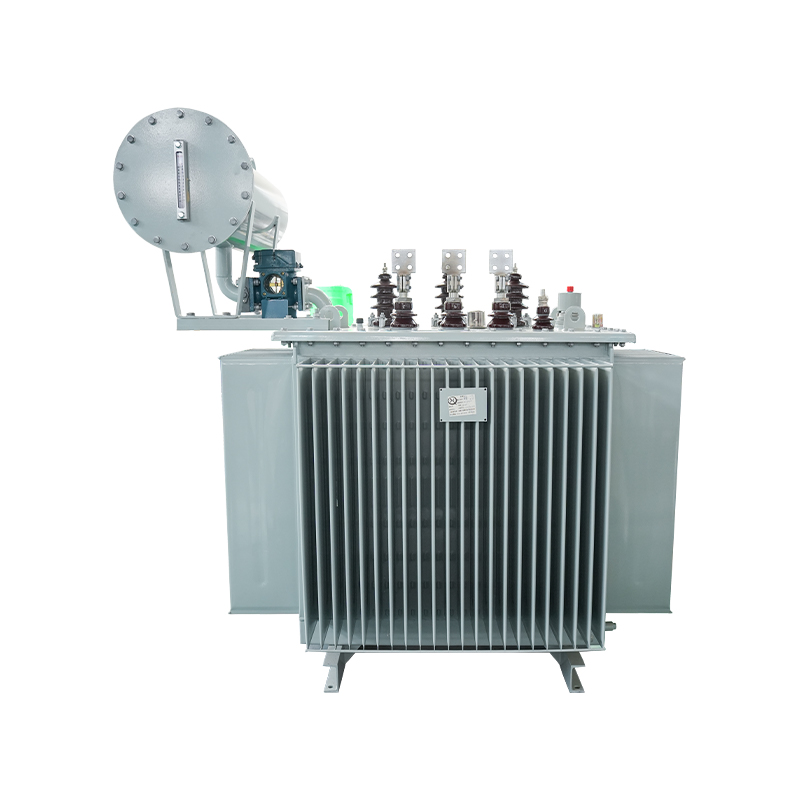
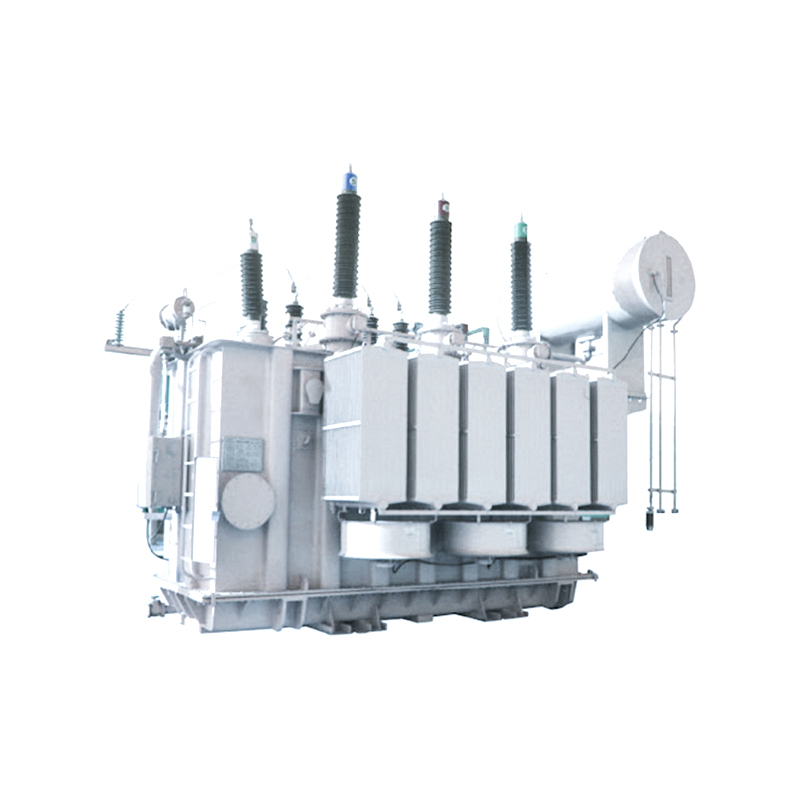
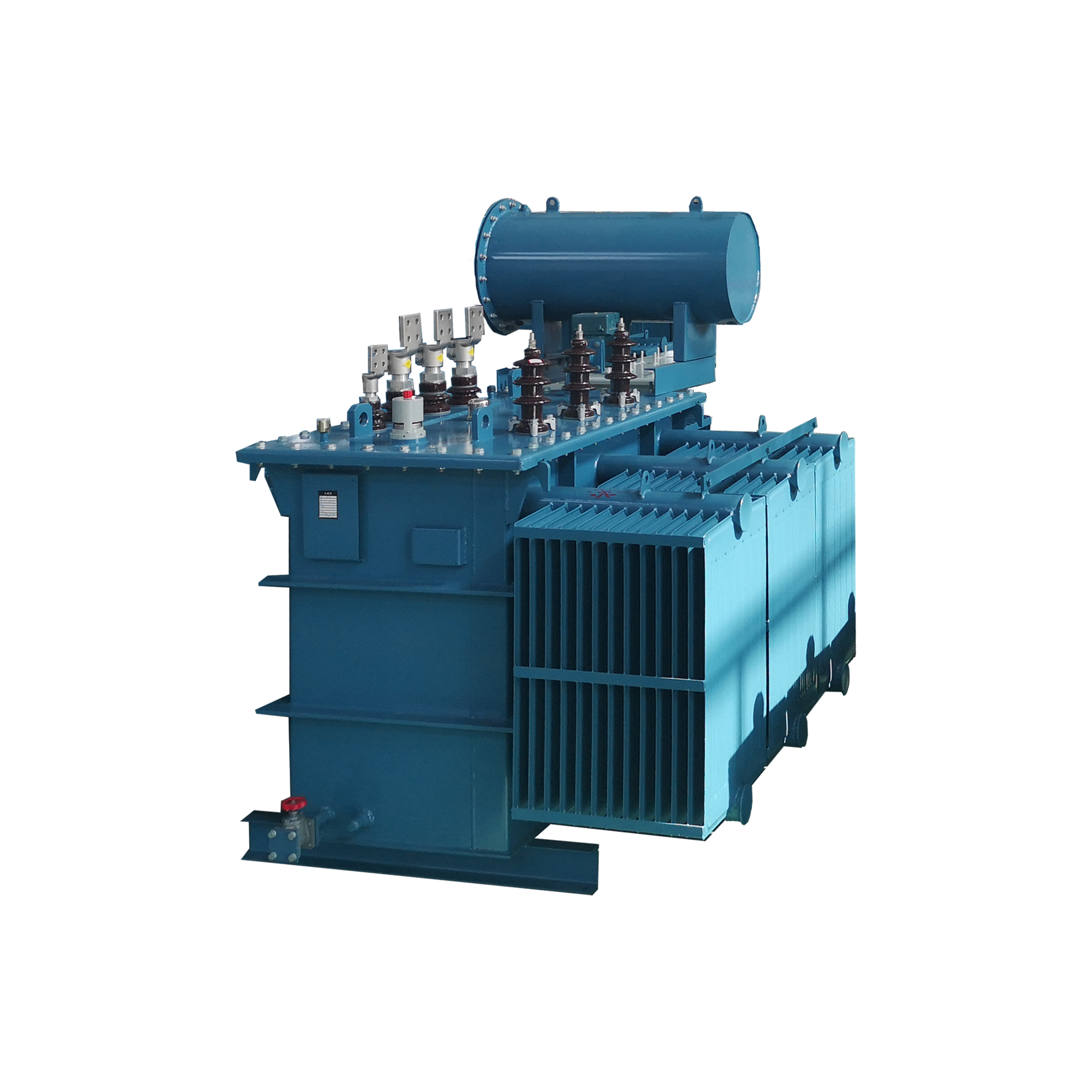
Three-Phase Transformer With Oil Pillow
630KVA 11KV
See Details
Content
Most industrial power systems are designed around a relatively predictable load profile: a mix of motors, lighting, and process equipment that draws current steadily, with occasional step changes when large motors start. Mining operations present a fundamentally different picture. The electrical loads that define a mine — grinding mills, crushers, hoists, pumps, ventilation fans — are characterized by cyclical, high-magnitude current demands that repeat continuously throughout a shift, often with little warning and with rise times measured in cycles rather than seconds.
The term "shock load" in mining engineering refers to a sudden, large increase in mechanical load on a motor-driven machine that is already running. Unlike a motor start — where the high inrush current is expected, time-limited, and occurs from a stationary state — a shock load imposes a step change in torque demand on a running motor, causing a corresponding step change in current draw from the supply system. This distinction matters for protection design: a motor starting event lasts seconds and then resolves as the motor reaches speed; a shock load event may last milliseconds to minutes and may repeat dozens of times per hour throughout continuous operation.
Three additional characteristics compound the difficulty of mining power system design. First, mining loads are remote: the electrical supply must travel long distances from the point of grid connection to the working faces and equipment rooms, meaning cable impedance adds to voltage drop during every current surge. Second, mining loads are large relative to the supply: a single SAG mill motor may draw as much power as a small residential suburb, meaning its current disturbances affect the entire site bus. Third, mining loads operate in environments where equipment failure carries safety consequences far beyond financial loss — in underground environments particularly, a protection mis-operation that leaves equipment running under a fault condition can be fatal.
Not all mining shock loads have the same electrical signature. Understanding the source-specific characteristics of each major shock load type is the prerequisite to designing protection systems that can distinguish a normal operating transient from a genuine fault condition.
SAG and Ball Mills are the highest-power shock load sources in most hard rock and gold mining operations. A SAG mill motor — typically rated between 5 MW and 20 MW — drives a rotating drum filled with ore and steel balls. As ore feed composition changes or large rocks enter the mill, the mechanical load on the motor changes abruptly and repeatedly. The electrical signature is a series of current pulses superimposed on a high continuous load: current may vary between 80% and 150% of rated full-load current on a cycle-by-cycle basis during normal operation. Because the motor is never truly at steady state, overcurrent protection must be set to tolerate sustained current above nameplate rating without tripping — yet still respond to a genuine locked-rotor condition within the motor's thermal withstand time.
Primary Crushers present a similar but more irregular shock profile. When an oversized rock enters a jaw or gyratory crusher, the crushing mechanism stalls momentarily and then releases as the rock fractures. This produces a sharp current spike — often reaching 400% to 600% of full-load current for 100 to 500 milliseconds — followed by a return to normal running current. The challenge for protection design is that this spike is indistinguishable in magnitude from a rotor winding fault if the relay has no time-delay discrimination capability. Crushers also undergo frequent reversals to clear jammed material, which produce their own current transients and must not trigger protection trips.
Large Pump and Fan Direct-On-Line Starts are the most analytically tractable shock load source but the most consequential for voltage quality. A large centrifugal pump or mine ventilation fan started direct-on-line (DOL) draws locked-rotor current of 5 to 8 times full-load current for the 10 to 30 seconds required to reach operating speed. During this period, the voltage at the motor terminals — and at every other load connected to the same bus — depresses in proportion to the current magnitude and the supply impedance. The problem is not the current itself but the voltage dip it creates: other running motors experience reduced terminal voltage, their torque falls with the square of voltage, and if the dip is severe enough, motor contactors drop out and SCADA alarms trigger across the site.
Mine Hoists and Winders produce shock loads with a distinctive acceleration-deceleration profile. At the start of each wind cycle, the hoist motor accelerates a fully loaded conveyance against gravity, drawing high current during the acceleration phase. At the end of the cycle, the motor regenerates energy back into the supply system as it decelerates the load. Modern variable-speed hoist drives manage this profile smoothly, but older fixed-speed hoist installations with contactor-switched resistor starters produce stepped current changes at each stage of acceleration — each step a distinct shock to the supply system — and the regenerative braking phase can create overvoltage conditions on weakly connected bus sections.
| Equipment Type | Typical Current Spike (% of FLC) | Duration | Repetition Rate | Primary Design Challenge |
|---|---|---|---|---|
| SAG / Ball Mill | 80–150% continuous variation | Continuous, cyclical | Continuous | Relay discrimination vs. locked-rotor fault |
| Primary Crusher | 400–600% | 100–500 ms per event | Multiple times per hour | Time-delay coordination; reversal tolerance |
| Large Pump / Fan DOL Start | 500–800% | 10–30 seconds | Several times per shift | Bus voltage dip; contactor dropout on other loads |
| Mine Hoist (fixed speed) | 200–400% per acceleration step | 2–5 seconds per step | Continuous cycling | Stepped current; regenerative overvoltage |
A transformer serving a mining load is not simply a device that converts voltage — it is a thermal and mechanical accumulator of every current transient that passes through it. The IEC 60076-7 loading guide for oil-immersed transformers defines transformer insulation life in terms of hot-spot temperature, which rises with the square of current. A transformer operating at twice rated current experiences four times the resistive heating of normal full-load operation. In a mining application where currents of two to six times rated level occur repeatedly throughout every shift, the cumulative thermal stress on winding insulation can reduce the transformer's service life well below the 25 to 40 years assumed in standard loading guides.
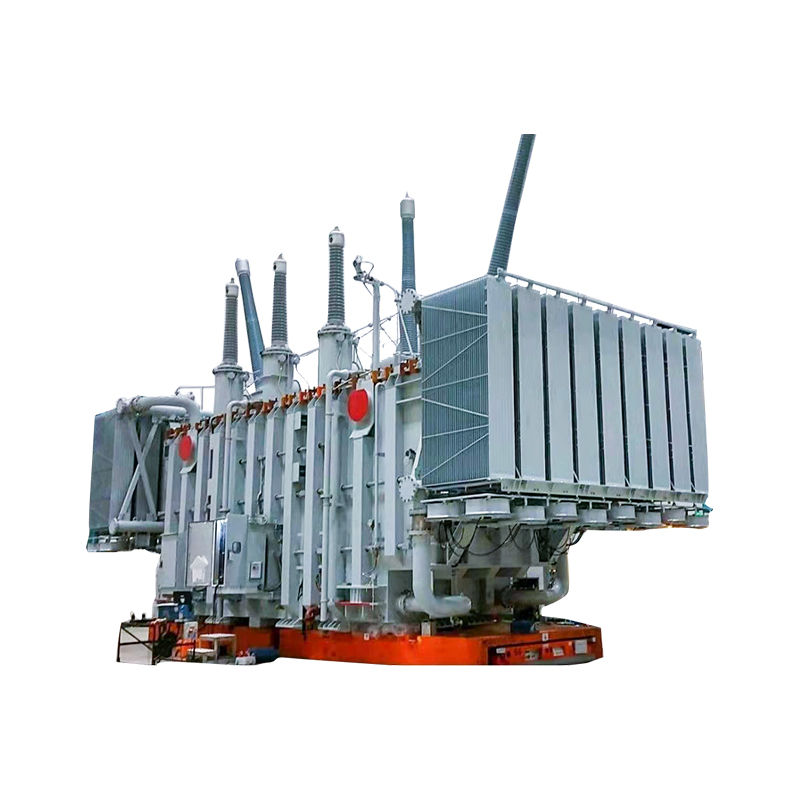
The mechanical stress is equally significant but less widely appreciated. Each current surge through a transformer winding generates electromagnetic forces between conductors that are proportional to the square of the current. At normal load, these forces are modest. At six times rated current, they are thirty-six times normal — and they act in alternating directions at twice the supply frequency. Repeated cycling of these forces fatigues the clamping system that holds the winding stack under compression, loosening the winding structure over time. A winding that is mechanically loose is vulnerable to vibration-induced insulation abrasion and, in a severe through-fault event, to winding collapse. For power transformers for high-demand industrial applications, the specification should require enhanced winding clamping systems, short-circuit withstand testing to IEC 60076-5, and a thermal design margin above the nameplate rating to accommodate the mining load profile.
The transformer impedance selection for mining applications involves a genuine engineering trade-off that has no universally correct answer. High impedance — typically 6% to 8% versus the standard 4% to 5% — limits the prospective short-circuit current at the transformer secondary, which reduces the breaking duty on downstream switchgear and the fault energy that must be interrupted by protection devices. This is a meaningful benefit in mining environments where short-circuit levels are high and fault clearance reliability is safety-critical. However, high impedance also increases the voltage drop across the transformer during motor-starting current surges. At 6% impedance with a motor starting current of 6 times full-load, the voltage drop across the transformer alone approaches 36% — before cable impedance is added — making it very difficult to limit total bus voltage dip to acceptable levels. Low impedance improves voltage stability during starting but raises the short-circuit level, potentially requiring more expensive switchgear with higher breaking capacity.
The practical resolution of this trade-off usually involves a combination of transformer impedance selection, motor starting method selection, and sequencing of large motor starts. For guidance on where transformer thermal margins and load assumptions most commonly go wrong in this type of application, see our analysis of transformer sizing mistakes around load margin and temperature rise.
The industry reference for acceptable voltage dip during motor starting is IEEE Std 141, the IEEE Recommended Practice for Electric Power Distribution for Industrial Plants, which recommends that voltage dip at motor terminals during starting should not exceed 15%. This limit is not arbitrary — it reflects the minimum voltage at which NEMA-rated motor contactors and control relays reliably hold their contacts closed. Below approximately 85% of rated voltage, contactors begin to drop out, which means a motor start large enough to depress the bus voltage by more than 15% can cause currently running motors to trip offline — creating a cascade that is worse than the original voltage disturbance.
In mining applications, achieving the 15% limit with direct-on-line starting of large motors is frequently impossible without network reinforcement or alternative starting methods. Consider a 3,000 kW SAG mill motor started DOL against a 10,000 kVA supply transformer with 6% impedance. The starting kVA of the motor — at a locked-rotor current multiplier of 6 times full-load — is approximately 18,000 kVA. This starting demand exceeds the transformer rating, producing a voltage dip that simple impedance arithmetic puts at well above 15% before cable impedance, supply impedance, or other connected loads are considered. The bus voltage during this start may fall to 70% to 75% of nominal, well below the contactor dropout threshold.
For a detailed treatment of how transformer load capacity interacts with these transient demands, see our article on transformer load capacity and performance limits under variable load. For distribution transformers for industrial and commercial sites serving mining loads below 1,000 kW, the voltage dip problem is less severe and can often be managed by careful impedance selection and start sequencing alone.
The engineering solutions to the voltage dip problem fall into three categories, each with different cost and performance implications. Variable frequency drives (VFDs) eliminate the starting current surge entirely by ramping the motor frequency from zero — the motor draws only full-load current throughout the starting process. This is the most effective solution and the correct choice for any motor where speed control has operational value, such as large pumps and ventilation fans. Soft starters reduce starting current to approximately 2 to 4 times full-load current (adjustable), which significantly reduces voltage dip without the full cost and harmonic management requirements of a VFD. They are appropriate for motors that run at constant speed but need a controlled start. Sequential starting — simply ensuring that large motors do not start simultaneously, with an enforced minimum time between starts — is the lowest-cost approach and can be implemented through SCADA logic without any additional motor control hardware, but it requires operational discipline and adds time to the mine startup procedure after a power outage.
The central challenge of protection relay coordination in mining power systems is distinguishing between two events that look almost identical in terms of their current magnitude: a large motor starting normally, and a motor or feeder experiencing a genuine overcurrent fault. Both events produce currents of 4 to 8 times full-load level. The difference is duration and trajectory — a starting motor's current decays from locked-rotor level to full-load over 10 to 30 seconds as it accelerates; a faulted circuit's current remains high or increases further as the fault impedance drops.
Standard definite-time overcurrent relays handle this discrimination by setting the pickup current above the expected starting current and the time delay long enough to allow the motor to reach speed. In a standard industrial application, this is straightforward: set pickup at 120% to 150% of locked-rotor current, set time delay at 1.5 times the expected starting time, and the relay rides through all normal starts while tripping on faults. In mining applications, the complication arises because the "starting" current for very large motors may be close to the maximum current the supply system can deliver — meaning the headroom for setting the relay above starting current while still below the available fault current is very narrow or nonexistent on some feeders.
Modern numerical protection relays address this through thermal replica modeling. Rather than responding purely to instantaneous current magnitude, a relay with thermal replica capability tracks the accumulated thermal energy in the motor winding over time, using the motor's thermal time constants as inputs. A locked-rotor condition — where the motor stalls and draws starting current indefinitely — accumulates thermal energy at a far higher rate than a normal start, and the relay trips when the modeled winding temperature reaches the thermal limit regardless of whether the current magnitude alone would have triggered a fixed-time overcurrent function. This allows the relay to tolerate normal long starting times while protecting the motor against genuine stall faults.
Differential protection — comparing current entering a transformer or motor at one set of terminals against current leaving at another — provides the most discriminating protection for the highest-value equipment and is insensitive to through-fault and starting currents that flow symmetrically through the protected zone. For large grinding mill motors and the transformers that supply them directly, differential protection is strongly recommended as the primary protection function, with overcurrent protection serving as backup. The differential relay must be set to restrain correctly during the magnetizing inrush current that occurs when the transformer is first energized, which has a characteristic second-harmonic content that modern relays can detect and use to block the differential trip during inrush without blocking it during a genuine internal fault.
Earth fault protection in mining power systems requires particular attention because of the grounding configuration. Many mining power systems — particularly underground installations — use high-resistance grounding or isolated neutral arrangements to limit the ground fault current to a level that does not create an immediate shock hazard, while still allowing the system to continue operating with a single ground fault present. This is directly contrary to the low-impedance grounding philosophy used in most utility distribution systems, where ground faults must be cleared immediately. The protection relay coordination must reflect whichever grounding philosophy the system uses: in high-resistance grounded systems, the earth fault relay must provide an alarm on first fault and a trip on second fault — a coordination logic sequence that is easy to mis-configure and has serious safety consequences if wrong.
Switchgear is rated for short-circuit breaking capacity — the maximum current it can interrupt at rated voltage — and for short-time withstand current — the maximum current it can carry for a defined period (typically one second) without damage. These ratings define the switchgear's performance in fault conditions. They do not directly address what happens to switchgear that is subjected to repeated, sub-fault-level current pulses over an extended service life.
In a mining application where the supply bus experiences current transients of 400% to 600% of full-load level multiple times per hour, every day, the mechanical components of the switchgear — the busbars and their supports, the circuit breaker operating mechanism, the draw-out chassis guides and contact systems — experience cumulative mechanical fatigue that is not captured in the standard rating framework. Busbar support insulators that are rated to withstand the electromagnetic forces associated with a single short-circuit event may develop micro-cracks under repeated sub-fault impulses; these cracks propagate invisibly until a fault event causes catastrophic failure. Circuit breaker operating mechanisms that cycle through their duty rating in five years on a standard industrial feeder may exhaust the same mechanism rating in eighteen months on a mining crusher feeder that trips and resets several times per shift.
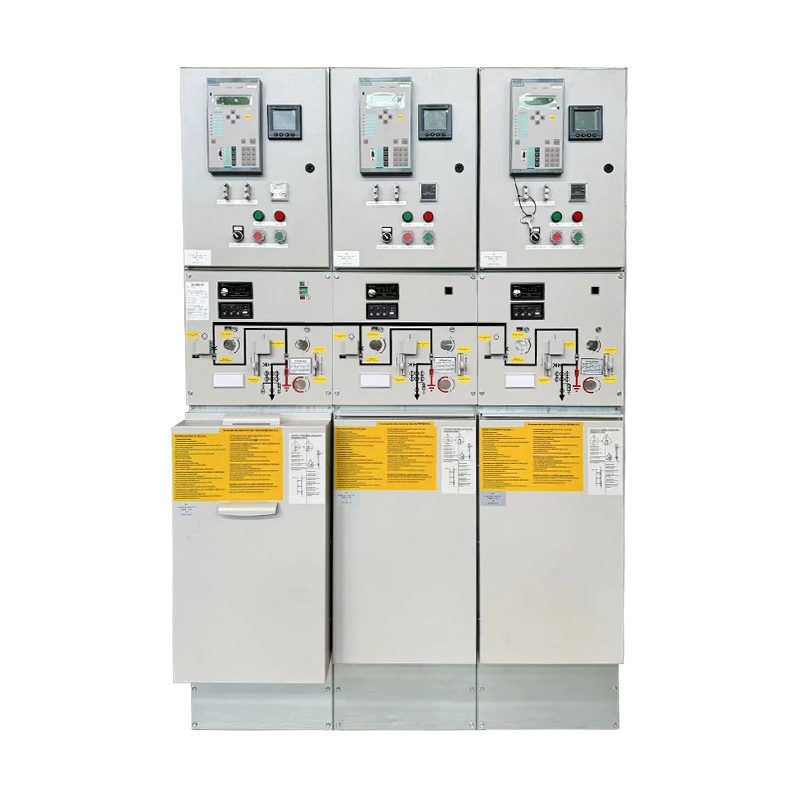
For guidance on how metal-enclosed switchgear responds to fault currents and what the mechanical implications of its ratings are in practice, see our technical article on how metal-enclosed high-voltage switchgear handles short-circuit faults and protects power systems. The correct response to the mining environment is not simply to select high and low voltage switchgear with a higher breaking capacity rating, but to specify an increased mechanical duty class, a higher number of rated operating cycles for circuit breakers on crusher and mill feeders, and a maintenance interval that reflects the actual number of current transients experienced rather than calendar time alone.
Arc flash energy is a related concern that is amplified in mining environments. The available fault current in a mining substation is often high due to large transformer ratings and low supply impedance, and the arc flash incident energy at any given switchgear panel depends on the fault current level and the protection clearing time. Where protection clearing times are extended — as they must be to ride through motor starting and shock load transients — the arc flash energy increases proportionally. Arc-resistant switchgear designs and arc flash detection relays that operate in milliseconds regardless of the overcurrent relay time delay setting are now widely specified for mining MV switchgear, precisely because the coordination requirements of mining loads force protection clearing times that create unacceptably high arc flash energy at standard switchgear ratings.
The engineering principles described above translate into a set of specific design requirements that should appear in the technical specification for any mining power system. The following checklist covers the key decisions that differentiate a mining-grade electrical system from a standard industrial installation of equivalent rated power.
| Design Area | Standard Industrial Approach | Mining-Grade Requirement | Rationale |
|---|---|---|---|
| Transformer impedance | 4–5% standard | 5–6% with motor starting study confirming voltage dip ≤15% | Balance fault level limitation against voltage stability |
| Transformer thermal margin | 100% of connected load kVA | 125–150% of connected load kVA, with mining load profile duty cycle factored in | Shock load peaks exceed nameplate rating repeatedly |
| Winding mechanical design | Standard IEC 60076-5 short-circuit withstand | Enhanced clamping, SC withstand test, vibration report required | Repeated sub-fault impulses fatigue standard winding clamping |
| Large motor starting method | DOL acceptable for most industrial motors | VFD or soft starter for motors >500 kW where bus voltage dip >15% on DOL | IEEE 141 contactor dropout risk; cascade tripping on site bus |
| Primary protection — mill/crusher motors | Overcurrent relay with time delay | Thermal replica relay with differential protection for motors >1 MW | Inrush discrimination; stall detection without nuisance tripping |
| Earth fault philosophy | Low-impedance grounded: immediate trip on ground fault | High-resistance or isolated neutral: alarm on first fault, trip on second; confirm with safety review | Wet underground environment requires continued operation on first fault |
| Switchgear mechanical duty | Standard operating cycle rating | Increased cycle rating on crusher/mill feeders; arc-resistant design; arc flash detection relay | Repetitive transients exhaust standard mechanisms; extended clearing times raise arc flash energy |
| Maintenance intervals | Calendar-based: annual or biennial inspection | Transient-count-based: triggered by accumulated operation count on critical feeders | Calendar intervals do not reflect actual mechanical fatigue accumulation |
Mining power system design is not a domain where conservative application of standard industrial practice produces a reliable result. The shock load characteristics of the equipment, the remote and hazardous operating environment, and the continuous-duty requirement that leaves no opportunity for scheduled maintenance during production place demands on transformers, protection relays, and switchgear that must be explicitly addressed at the specification stage. The cost of under-specifying is not only equipment failure — it is production loss, safety risk, and the difficulty of remediating an installed system that was not built for the load it must carry.
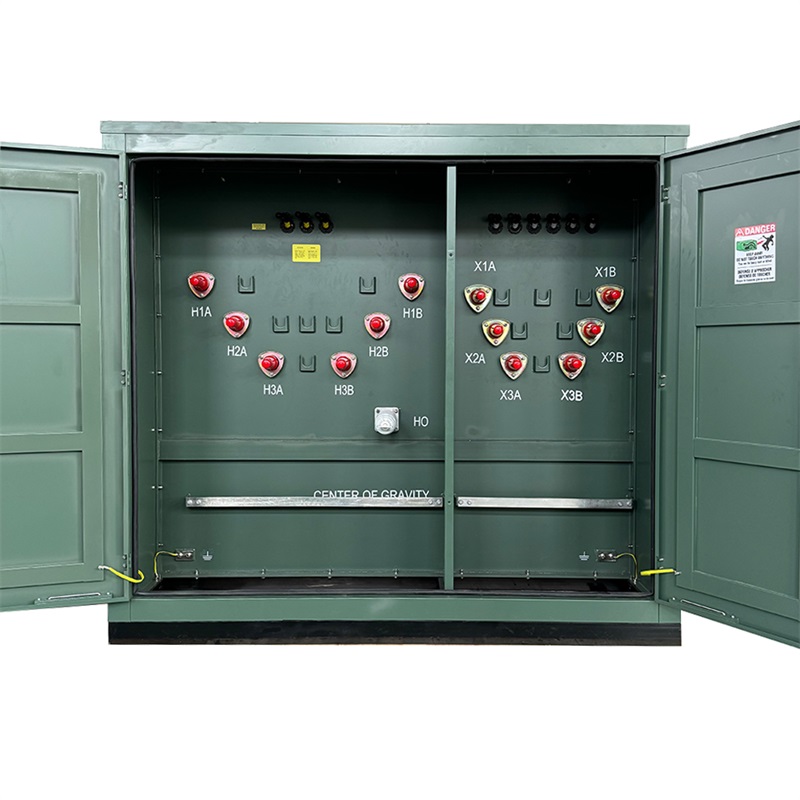
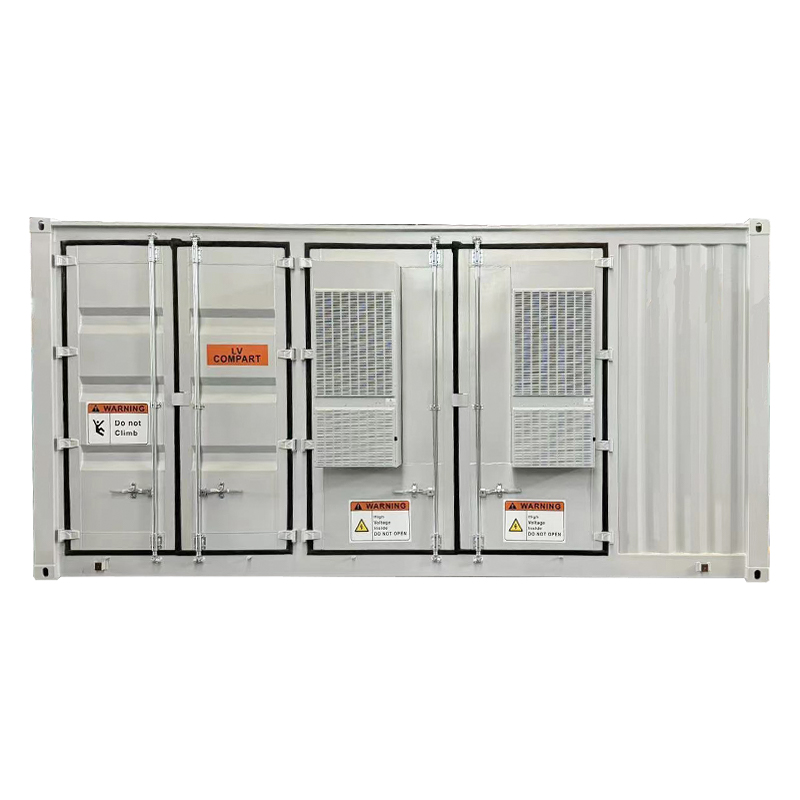
A Cabinet-Type Outdoor Prefabricated Substation, which is a compact, all-in-one electrical distribution solution designed for outdoor installation. Th...
See Details
Copyright © Jiangsu Dingxin Electric Co., Ltd. Rights Reserved.

Energy Efficient Transformers Manufacturers Electrical Transformers Factory
Contact Us