Outdoor prefabricated substations are one of the fastest-growing segments in power infrastructure — and for good reason. Factory-assembled, type-tested, and shipped ready to energize, they can cut on-site construction time by more than 50% compared to conventional site-built approaches. But "prefabricated" does not mean "no civil work." It means the civil, primary, and secondary engineering interfaces must be resolved before the unit ships — not after it arrives on a flatbed.
This article provides a structured interface checklist that project engineers, EPC contractors, and substation designers can use to systematically verify every handoff point between the three core disciplines: primary electrical equipment, secondary control and protection systems, and civil/structural works. Whether you are specifying a compact outdoor prefabricated substation, a cabinet-type unit, or a containerized E-house, the checklist applies across all form factors.
Understanding the Three-System Architecture of a Prefab Substation
Before diving into the checklist, it is essential to establish a common vocabulary for the three systems whose interfaces drive most installation problems.
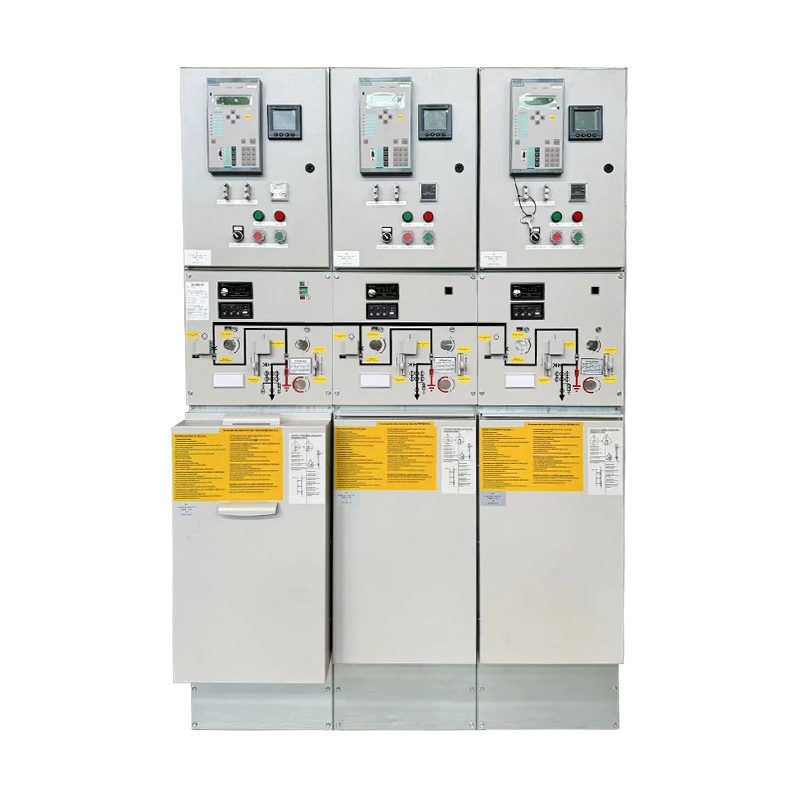
The primary system encompasses everything operating at the highest voltage of the installation — incoming MV switchgear, the power transformer, outgoing MV or LV switchboards, busbars, cable terminations, surge arresters, and earthing conductors connected to live equipment. These are the components that carry load current and must interrupt fault currents safely.
The secondary system covers all equipment used to control, protect, monitor, and measure the primary system. This includes protection relays, metering CTs and PTs, SCADA RTUs, bay control units, DC battery systems, control wiring, and communication hardware. Secondary equipment operates at low voltage (typically 24V DC or 110V DC) but its correct interface with primary equipment is what determines whether a fault gets cleared in 80 milliseconds or causes a cascade failure.
The civil and structural system provides everything the primary and secondary equipment sits on, inside, or is anchored to: the concrete foundation pad, cable trenches and ducts, earthing grid, drainage, fencing, access roads, lighting, and the prefab enclosure structure itself. Civil works are often managed by a different contractor — or a different engineering discipline — which is precisely where interface gaps arise.
Primary Equipment Interface Checklist
The following items represent the minimum set of primary interface verifications that must be completed and documented before a prefab substation unit is released for factory assembly.
Incoming Supply Connections
- Confirm incoming cable route, cable type, number of parallel runs, and termination method (cable box, plug-in bushings, or overhead line termination via surge arrester)
- Verify that the incoming MV cable entry direction (bottom, top, or rear) matches site cable trench routing
- Confirm minimum bending radius of incoming cables against available trench depth
- Verify that incoming switchgear rated voltage (7.2 / 12 / 17.5 / 24 / 40.5kV) matches the network nominal voltage plus standard margin
- Confirm rated short-circuit breaking current (kA) against network fault level study — include future network upgrades where known
Transformer Interface
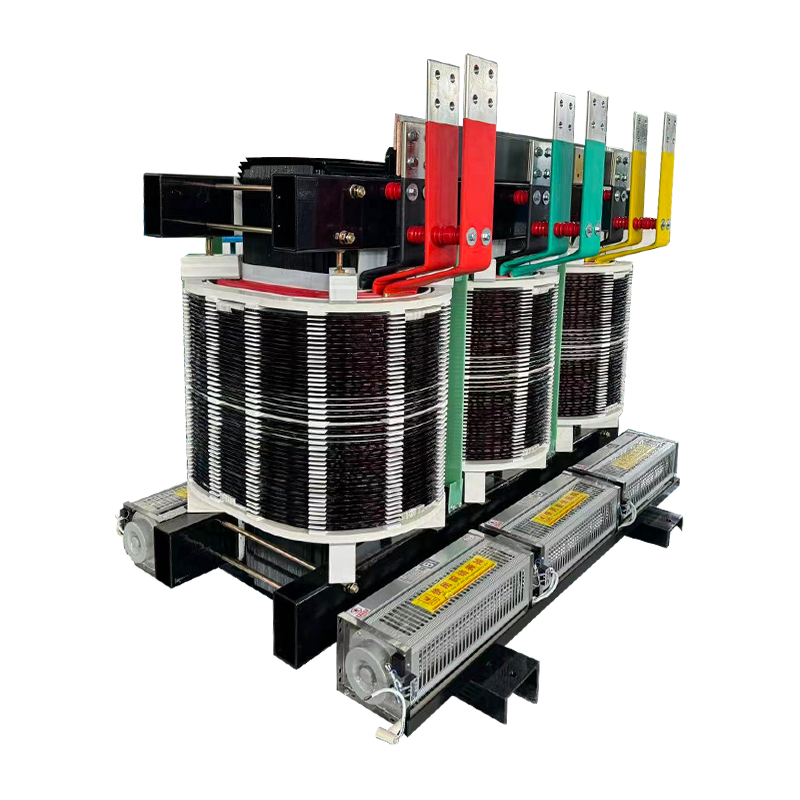
- Confirm transformer kVA rating, primary and secondary voltage, vector group (e.g. Dyn11), and tap changer type (off-circuit OLTC or fixed taps)
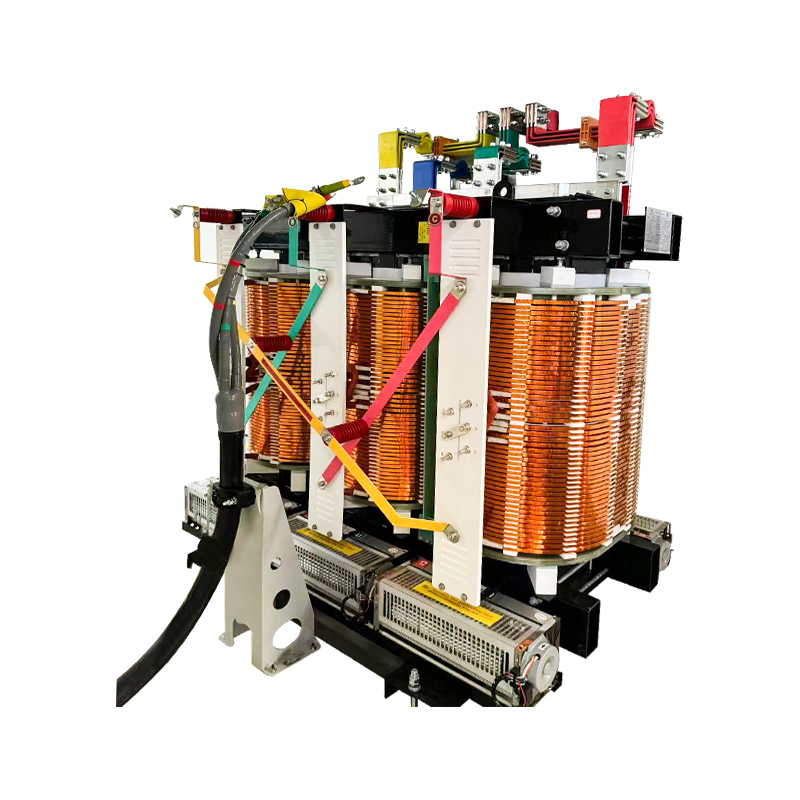
- Verify transformer cooling type (ONAN / ONAF / OFAF) and confirm that adequate ventilation or forced-cooling provisions are included in the enclosure design
- For oil-immersed transformers, confirm oil containment volume and drainage path (bunded pit, gravel trap, or external sump) meets local environmental regulations
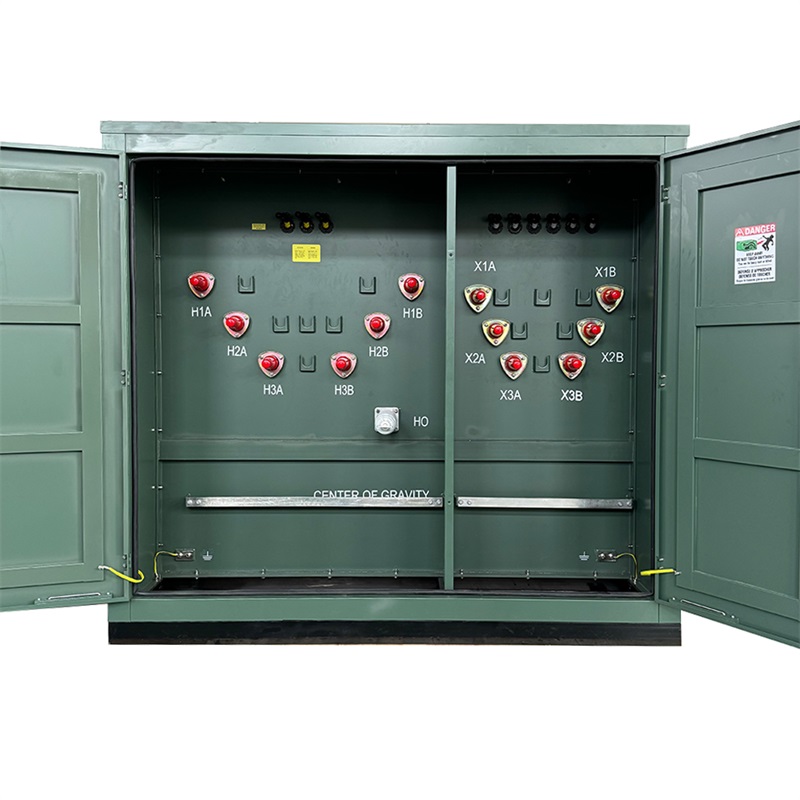
- Confirm HV and LV bushing positions align with switchgear bus connection geometry — interference checks must be completed in 3D model or detailed layout drawing
- Confirm transformer transport weight and lifting points are compatible with site crane capacity and access route load limits
Outgoing Feeders and LV Switchboard
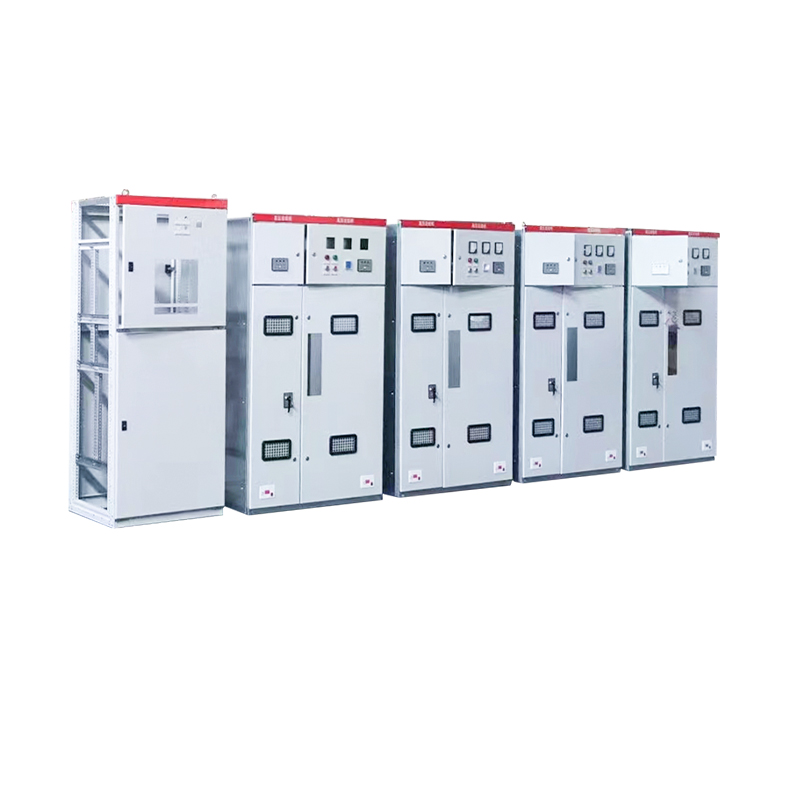
- Confirm number, rating, and breaking capacity of outgoing LV circuit breakers or MV feeder panels
- Verify outgoing cable entry/exit directions match site LV cable routes
- Confirm busbar rating (A) for maximum continuous load including future expansion reserve
- Confirm arc flash classification of LV switchboard per IEC 61439 or ANSI/IEEE C37.20 as applicable
Earthing and Bonding
- Verify main earth conductor size and material (copper, 95mm² minimum is common for MV applications) and confirm connection point on prefab enclosure frame
- Confirm that the prefab unit's internal earth bar is connected to the site earthing grid at a minimum of two separate points to eliminate single-point failure
- Verify touch and step voltage limits have been assessed for the site earthing design per IEC 60479 or IEEE 80
- Confirm lightning protection rod or overhead earth wire is specified for the prefab enclosure and bonded to the earthing grid
Primary interface checklist summary — key parameters and responsible party
| Interface Item |
Key Parameter to Lock |
Responsible Party |
Typical Stage |
| Incoming cable entry direction |
Top / bottom / rear; cable duct coordinates |
Civil + Electrical |
Detailed Design |
| Transformer rating and vector group |
kVA, kV, vector group, tapping range |
Electrical |
Procurement |
| Oil containment |
Volume (L), drainage path, bund material |
Civil + Environmental |
Detailed Design |
| Earthing grid connection |
Conductor size, dual connection points |
Civil + Electrical |
Construction |
| Fault level (kA) |
Prospective fault current + future headroom |
Electrical (network studies) |
Concept / FEED |
Secondary System Interface Checklist
Secondary system interfaces are where the majority of late-stage engineering changes occur on prefab substation projects. The secondary equipment inside the prefab unit must communicate correctly with protection relays, SCADA systems, and metering infrastructure that may be located outside the unit or managed by a third party.
Protection Relay and Control Wiring
- Confirm CT ratios, accuracy classes (5P20 for protection, 0.2S for revenue metering), and burden (VA) for each protection and metering CT in the primary switchgear
- Confirm PT ratios, accuracy classes, and burden for each metering and protection VT
- Verify that protection relay settings files have been reviewed and approved by the network operator before factory acceptance testing
- Confirm trip circuit supervision (TCS) is implemented on all circuit breaker trip coils
- Verify all control wiring terminal blocks are accessible from the front of the secondary panel without de-energizing the primary busbar
DC Auxiliary Power Supply
- Confirm DC system voltage (24V, 48V, 110V, or 220V DC) and verify compatibility with all relay, breaker control, and SCADA equipment within the unit
- Confirm battery capacity (Ah) provides at least 8 hours of autonomous operation on full load (protection relays active, breakers charged) without AC supply
- Verify battery charger input voltage matches available auxiliary AC supply at the site
- Confirm battery room or battery cabinet ventilation prevents hydrogen accumulation above 1% concentration (per IEC 62485-2)
SCADA, Telecontrol, and Communications
- Confirm communication protocol: IEC 61850 (GOOSE / MMS), IEC 60870-5-101/104, DNP3, or Modbus — and verify that the RTU or bay controller supports the agreed protocol version
- Confirm fiber optic or copper cable route from the prefab unit to the master control center, including provision of cable glands and ducts in the enclosure base frame
- Verify that the GPS time synchronization source (GNSS receiver or NTP server) is installed and that all IEDs receive synchronized time signals for fault recording accuracy
- Confirm cybersecurity requirements: network segmentation, firewall rules, and access control policy in accordance with IEC 62351 or applicable national utility standards
Metering and Revenue Interface
- Confirm whether revenue metering is located within the prefab unit or at a separate utility metering point — this determines CT/PT accuracy class specification
- Verify meter sealing provisions and metering panel access route for utility meter readers or automated meter reading (AMR) systems
- Confirm pulse output or Modbus register map for energy data integration with site energy management system (EMS)
Civil and Structural Interface Checklist
Civil interfaces are often the last to be resolved and the first to cause installation delays. The following items must be confirmed with the civil and structural engineering team, and drawings must be formally issued to the prefab unit manufacturer before factory fabrication begins.
Foundation and Structural Support
- Confirm foundation pad dimensions, surface flatness tolerance (typically ±3mm over the full base footprint), and concrete strength (minimum C25/30 is common)
- Confirm anchor bolt pattern and diameter — these must match the prefab unit base frame drawings exactly. Retrofitting misaligned anchor bolts is disproportionately expensive
- Verify that the foundation design accounts for the total operating weight of the prefab unit including oil-filled transformer, batteries, and cable connections
- For seismic zones, confirm that the foundation and anchor design complies with IEEE 693 or local seismic code, and that the prefab manufacturer has provided seismic qualification data for the equipment
- Confirm that the foundation elevation provides sufficient height above the 1-in-100-year flood level for the site
Cable Trenches, Ducts, and Conduits
- Confirm cable trench routing plan is coordinated with the prefab unit cable entry positions — trench centerline and entry sleeve coordinates must be frozen before concrete is poured
- Verify that separate conduit/duct banks are provided for MV power cables, LV power cables, control cables, and communications cables — co-routing of MV and control cables is not acceptable
- Confirm cable trench covers are rated for expected vehicle loading if maintenance vehicles must cross them
- Verify trench drainage slope and sumps prevent water accumulation at cable entry points
- Confirm that spare ducts are provided (minimum 20% spare capacity) for future cable additions
Access, Roads, and Fencing
- Confirm access road load capacity accommodates the heaviest single delivery — for large high and low voltage prefabricated substations this can exceed 40 tonnes on the transformer alone
- Verify turning radius and overhead clearances along the delivery route for the longest module being shipped
- Confirm security fencing height, material, and anti-climb provisions meet the network operator's security requirements and local planning conditions
- Confirm that operations and maintenance personnel can safely access all external inspection points (oil level sight glass, pressure relief device, conservator) without entering the MV live zone
Drainage, Oil Containment, and Environmental
- Confirm that the oil containment volume equals 110% of the largest single oil volume at the site (typically the transformer oil volume)
- Verify that the containment drainage system separates contaminated oil/water from clean surface water before discharge to a public drain
- Confirm that gravel or paving around the prefab unit prevents soil erosion and fire spread in the event of an oil leak
- Verify site noise assessment has been completed if the substation is near residential areas — transformer hum and cooling fan noise are regulated in many jurisdictions
Civil interface — common gaps between prefab manufacturer drawings and site civil design
| Gap Type |
Consequence if Unresolved |
Resolution Trigger |
| Anchor bolt mismatch |
Foundation rework, project delay 2–6 weeks |
Issue GA drawing for civil review at FEED stage |
| Cable entry sleeve position error |
Concrete core-drilling, structural risk, rework cost |
Freeze cable entry coordinates before pour |
| Inadequate oil containment volume |
Environmental permit rejection, regulatory fine |
Environmental engineer review at design stage |
| Access road load rating insufficient |
Delivery route change, crane hire, delivery delay |
Transport study before procurement |
| MV/control cable co-routing in trench |
Relay maloperation due to electromagnetic interference |
Cable routing drawing review by protection engineer |
Factory Acceptance Test (FAT) Interface Verification
The Factory Acceptance Test is the last opportunity to verify primary-secondary-civil interfaces before the unit leaves the factory. A well-structured FAT checklist should confirm the following interface items in addition to standard electrical tests:
- Physical dimensional checks: Measure anchor bolt hole positions, cable entry sleeve coordinates, and enclosure external dimensions against the civil foundation drawing. Any deviation greater than ±5mm must be resolved before dispatch.
- Secondary system end-to-end test: Inject test currents and voltages into CT and PT circuits, verify that protection relays operate correctly, confirm trip signals reach circuit breaker trip coils, and verify SCADA data points appear correctly at the remote control center.
- DC auxiliary supply test: Disconnect AC supply and confirm that batteries sustain all secondary loads for the specified autonomy period under simulated load.
- Enclosure weatherproofing check: Verify IP rating of all cable gland entries, door seals, and ventilation louvres. Check that all penetrations are sealed with fire-rated materials where required.
- Transport preparation check: Verify that breaker trucks are removed from MV switchgear panels, oil is drained to transport level in oil-immersed transformers, and all loose components are secured for road or sea transport.
Interface Coordination Timeline: When to Resolve Each Checklist Item
Interface problems are exponentially cheaper to resolve early. The table below maps each checklist category to the project stage by which it must be closed.
Recommended interface resolution timeline by project stage
| Project Stage |
Primary Interface Items |
Secondary Interface Items |
Civil Interface Items |
| Concept / FEED |
Voltage class, fault level, transformer rating |
Communication protocol, DC voltage |
Site access, road load capacity, flood level |
| Detailed Design |
Cable entry directions, bushing geometry, CT/PT ratios |
Relay settings, SCADA point list, metering class |
Foundation dimensions, anchor bolt pattern, cable trench routing |
| Procurement / Factory Fabrication |
Transformer vector group, tapping range, cooling type |
IED firmware version, relay settings file approval |
Oil containment volume confirmed, drainage design approved |
| FAT |
Dimensional checks vs. civil drawing |
End-to-end protection and SCADA test |
Transport preparation verification |
| Site Installation |
Earthing grid connections, cable terminations |
Communications link commissioning, time sync |
Foundation level check, anchor bolt torque |
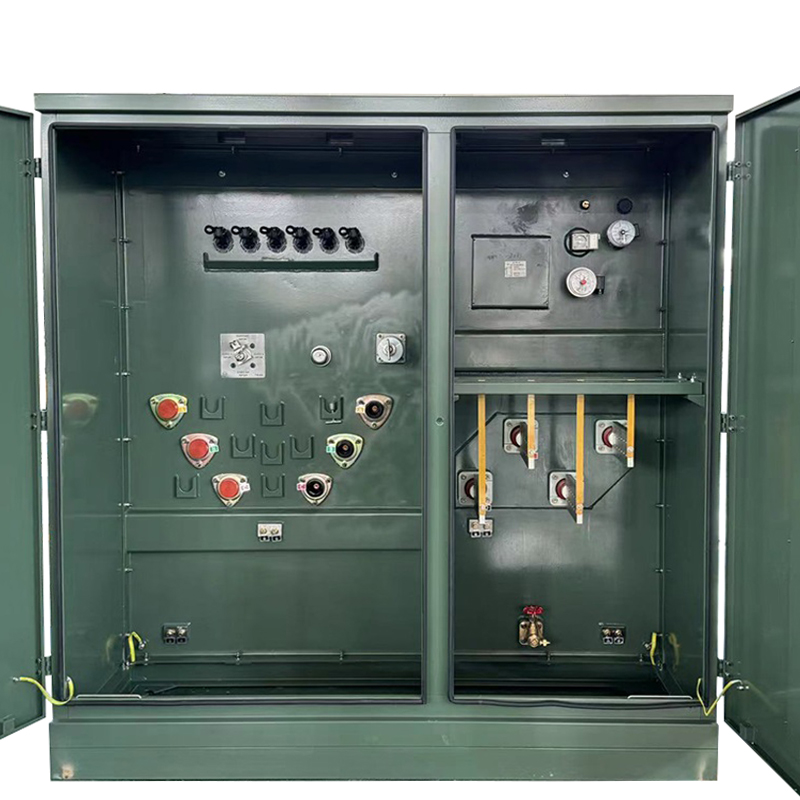
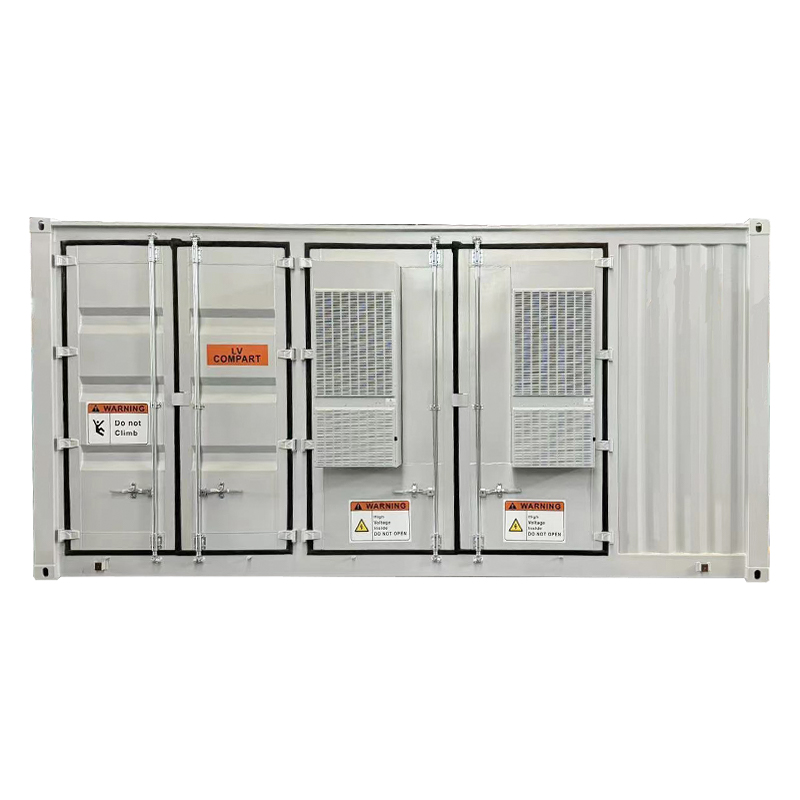
Coordinating these interfaces from concept stage through to commissioning is significantly simpler when the substation is supplied as an integrated package from a single manufacturer. Our outdoor prefabricated substation range is engineered with factory-coordinated primary equipment, pre-wired secondary panels, and a base frame designed to match a standard foundation template — reducing civil interface risk on every project. For projects requiring a specific transformer rating or enclosure configuration, contact our engineering team with your single-line diagram and site data sheet to receive a coordinated interface drawing package.
 English
 русский
 Español


Contact Us