 English
 русский
 Español
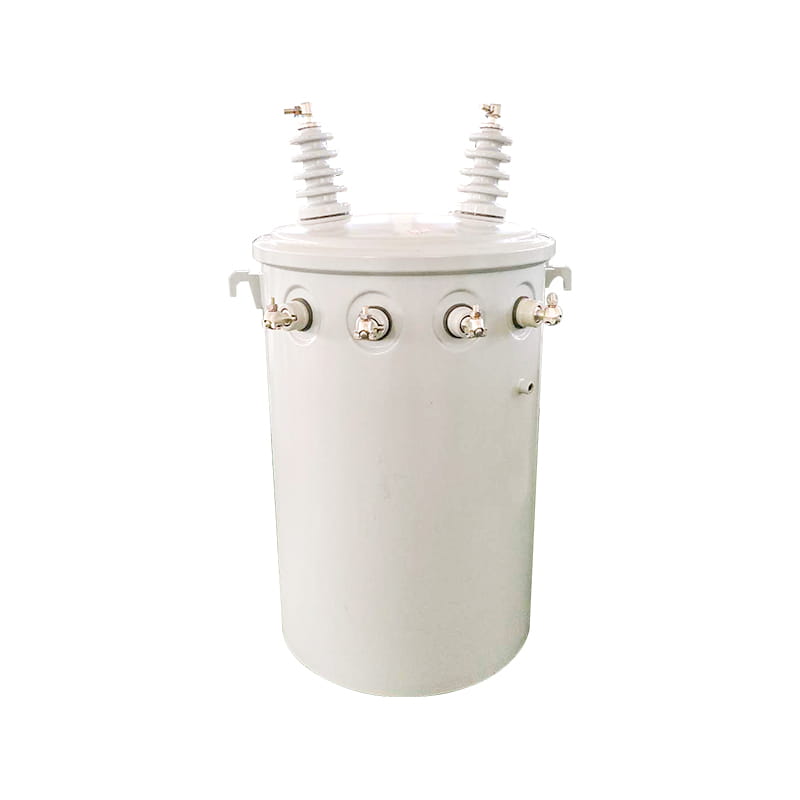
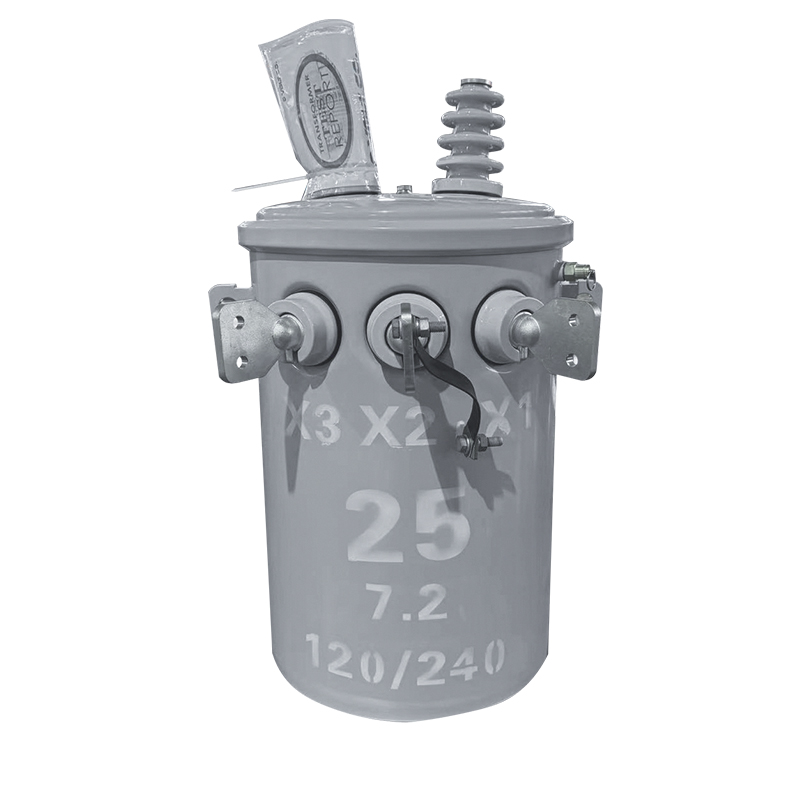
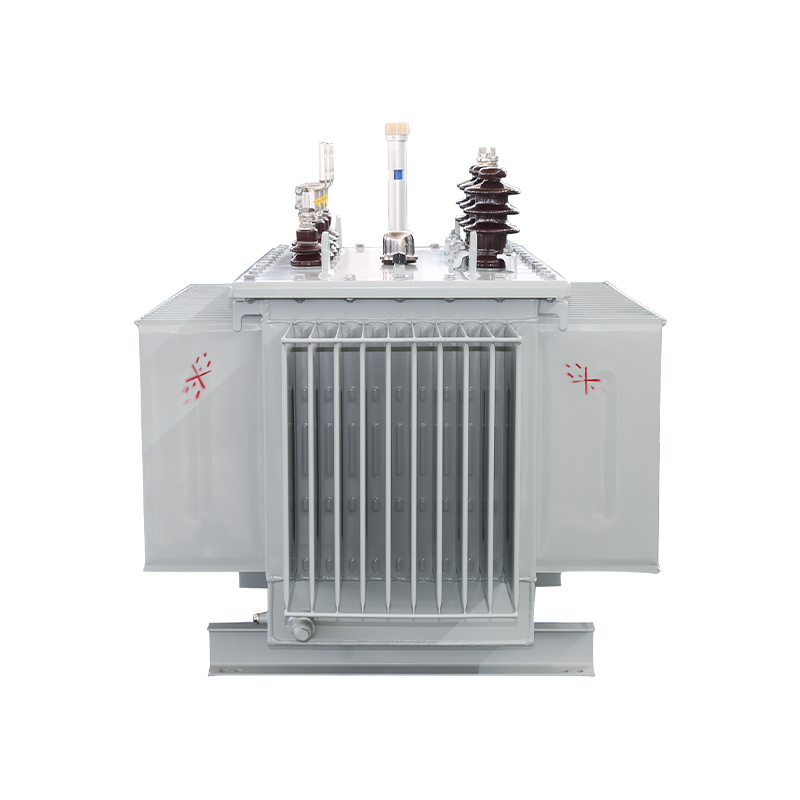
Energy-Saving Single-Phase Oil-Immersed Pole-Mounted Transformer
15KVA 13.8KV/0.4KV
See Details
Content
A standard power transformer operates in a relatively benign electrical environment. Its load changes gradually, its current waveform is approximately sinusoidal, and its thermal state shifts slowly enough that the insulation system can accommodate the change without mechanical stress. A furnace transformer — whether supplying an electric arc furnace (EAF), a ladle furnace, or a submerged arc furnace — operates in the opposite of this environment every minute of every shift. The current waveform is severely distorted. The load swings from near-zero to full rated value in milliseconds as the arc strikes, extinguishes, and reignites. The thermal state of the winding changes so rapidly that the insulation experiences mechanical stress from differential thermal expansion on every arc cycle.
The consequence is that standard transformer design practice, applied to a furnace application, produces a unit that ages at a multiple of its nameplate rate and fails well before its designed service life. The failure modes are not exotic: they are the same insulation degradation, winding loosening, and bushing overheating that occur in any transformer under stress — but they occur far faster and are driven by two distinct mechanisms that must be understood and addressed independently. The first is harmonic heating: the additional losses generated in windings and core by the non-sinusoidal current that the arc furnace draws. The second is thermal shock: the mechanical damage caused by the repeated, rapid temperature cycling that the winding experiences as the arc repeatedly strikes and collapses.
Both mechanisms are present simultaneously in every furnace transformer, and they interact: the elevated temperature baseline created by harmonic heating reduces the insulation's tolerance to the mechanical stress of thermal shock. Designing for one without the other produces a transformer that still fails prematurely — just from the mechanism that was not addressed. For the power transformer range including high-current industrial designs, furnace duty represents the most demanding application category and requires explicit specification of both failure modes in the procurement document.
The K-factor rating system defined in ANSI/IEEE C57.110 was developed primarily to characterize the harmonic heating produced by loads such as variable frequency drives, UPS systems, and rectifiers. These loads produce harmonics at predictable, fixed frequencies — predominantly the 5th, 7th, 11th, and 13th harmonics for six-pulse converters — whose magnitudes and phase relationships can be measured, tabulated, and used to calculate a single K-factor number that summarizes the additional winding eddy current loss relative to fundamental-frequency operation. This framework is well-suited to the converter and drive applications for which it was designed.
Electric arc furnaces produce a fundamentally different harmonic environment. The arc is a non-linear, time-varying resistance whose impedance changes continuously and unpredictably as the electrode gap varies, the scrap charge moves, and the arc plasma column fluctuates. The result is a current waveform that contains not only integer harmonics of the supply frequency — 2nd, 3rd, 5th, 7th, and higher — but also interharmonics: frequency components that fall between the integer multiples, such as 73 Hz or 147 Hz in a 50 Hz system. Interharmonics are not captured by the K-factor calculation, which assumes that all significant harmonic energy falls precisely on integer multiples of the fundamental. A K-factor calculated from an EAF current spectrum therefore systematically underestimates the actual additional losses in the transformer winding.
The arc furnace harmonic environment also changes continuously throughout the heat cycle. During the initial melt-down phase, when electrodes are boring through cold scrap, the arc is highly unstable, the current waveform is severely distorted, and harmonic content is at its maximum. As the charge melts and the arc stabilizes above a liquid bath, the current becomes less distorted and the harmonic content falls. A transformer specification that characterizes the harmonic environment only at the refining phase — which is electrically easier — will under-specify the winding design for the melt-down phase, which is where the greatest harmonic heating occurs and where the thermal baseline that determines insulation aging rate is established.
Three-phase unbalance is the third dimension of the EAF harmonic problem that K-factor does not address. Arc furnaces are inherently unbalanced loads: the three electrode arcs do not draw equal currents, particularly during the melt-down phase when one electrode may bore deeper than the others. Unbalanced phase currents produce zero-sequence and negative-sequence current components that circulate in transformer windings and generate losses in the core and structural components that are not captured in a symmetric harmonic analysis. Furnace transformer winding configurations — typically delta on the HV side with a delta or extended-delta secondary — are selected partly to provide a circulating path for zero-sequence currents and prevent them from propagating into the supply network, but this means the transformer winding must carry these circulating currents in addition to the load current.
The primary mechanism by which harmonics damage transformer insulation is not direct electrical stress on the dielectric — it is heat. Harmonic currents produce additional losses in transformer windings through two pathways: increased resistive (I²R) losses from the higher RMS current that a distorted waveform carries for a given fundamental-frequency power delivery, and increased eddy current losses in the winding conductors. The eddy current component is the more damaging because it scales with the square of the harmonic order: a 5th harmonic current component produces 25 times the eddy current loss per unit of current that the fundamental produces, and a 7th harmonic produces 49 times. Higher harmonic orders, even at low amplitudes, therefore contribute disproportionately to winding heating.
The IEEE C57.110 recommended practice for establishing transformer capacity when supplying nonsinusoidal load currents provides the industry-standard method for calculating the additional winding losses caused by harmonic currents and determining the resulting derating of a transformer's load capacity. The derating is expressed as a reduction in the maximum permissible load current relative to rated, calculated to maintain the winding hot-spot temperature within the design limit. For EAF applications with severe harmonic content, this derating can be significant: a transformer rated 40 MVA for sinusoidal load may have an effective capacity of 30 to 32 MVA under typical EAF harmonic conditions — a reduction that must be accounted for in the power system design, not discovered after installation.
The hot-spot temperature in a transformer winding is not uniform: it occurs at a specific location in the winding geometry where the combination of conductor proximity effects, leakage flux concentration, and cooling oil flow restriction produces the highest local temperature. In a standard transformer winding, the hot-spot location can be predicted from analytical models with reasonable accuracy. In a winding carrying severe harmonic currents, the distribution of eddy current losses is more complex and the hot-spot may be more intense and more localized than in the sinusoidal case. Transient thermal models used to assess harmonic loading should include the hot-spot factor appropriate to the actual winding geometry, not the generic value assumed in loading guides developed for sinusoidal operation. For a detailed treatment of how temperature rise interacts with load margin assumptions in transformer specification, see our analysis of transformer sizing mistakes around load margin and temperature rise, and our article on transformer load capacity and performance limits under variable load.
The insulation aging consequence of sustained elevated hot-spot temperature follows the Arrhenius relationship: each 6°C to 8°C increase in sustained hot-spot temperature halves the remaining insulation life. A furnace transformer whose hot-spot runs 20°C above design expectation due to unaccounted harmonic heating ages at four to five times the rate assumed in the specification, reducing a designed 25-year service life to five to six years. This is not a theoretical concern — it is a well-documented failure mode in furnace transformers that were procured to standard transformer specifications without explicit harmonic derating.
Thermal shock in a furnace transformer is distinct from the sustained elevated temperature caused by harmonic heating. It refers to the rapid, repeated temperature cycling that the winding experiences as the arc strikes, stabilizes, collapses, and reignites — a cycle that may complete dozens of times per minute during active melting. Each arc ignition event draws a surge of current that heats the winding conductors almost instantaneously; each arc extinction drops the current and allows the conductors to cool. The thermal time constant of the oil and the insulation paper is much longer than the arc cycle, so the paper does not fully equilibrate between cycles — but the copper conductor temperature rises and falls with the arc current on every cycle.
The mechanical damage mechanism is straightforward: copper and cellulose insulation paper have different coefficients of thermal expansion. Copper expands at approximately 17 × 10⁻⁶ per °C; the insulation paper wrapped around it expands at a lower rate and in a direction constrained by the winding geometry. As the copper conductor temperature rises with each current surge, it expands against the constraining paper, compressing it. As the conductor cools between surges, it contracts, releasing the compressive force on the paper. Over thousands of such cycles — a single EAF heat of 40 to 60 minutes may produce hundreds of arc ignition events — the insulation paper experiences a fatigue loading that progressively degrades its mechanical integrity. Cracks develop in the paper wrap, the cracks allow oil to penetrate and soften the paper further, and the effective dielectric strength of the insulation at that location decreases.
The winding clamping system is the second mechanical component degraded by thermal shock. Transformer windings are held in compression by a clamping structure — typically a combination of press rings, axial spacers, and tie rods — that maintains the winding geometry against the electromagnetic forces generated during normal operation and short-circuit events. As the insulation paper softens and compresses under repeated thermal cycling, the clamping load relaxes. A winding that is no longer under the correct compressive preload is vulnerable to axial movement during a severe through-fault event, where the electromagnetic forces acting on the winding conductors can displace the entire winding stack axially. A displaced winding produces turn-to-turn shorts and requires complete rewinding — the most expensive transformer repair category short of total replacement.
The design response to thermal shock is mechanical robustness rather than electrical redesign. Furnace transformers should specify enhanced winding clamping systems with provisions for re-tightening after installation, pre-compressed insulation materials that have been thermally aged before assembly to eliminate initial shrinkage, and short-circuit withstand testing per IEC 60076-5 that includes a thermal cycling component rather than only the single-event electromagnetic force test.
| Characteristic | Harmonic Heating | Thermal Shock |
|---|---|---|
| Physical mechanism | Elevated eddy current losses → sustained hot-spot temperature rise | Repeated rapid temperature cycling → insulation paper fatigue and winding loosening |
| Primary damage location | Winding conductor insulation at hot-spot | Insulation paper wrap and winding clamping system |
| Time scale of damage accumulation | Months to years (accelerated aging rate) | Thousands of arc cycles; detectable within months |
| Key standard reference | IEEE C57.110; IEC 60076-7 | IEC 60076-5 (short-circuit withstand); IEC 60076-2 (temperature rise) |
| Design mitigation | Harmonic-rated winding conductor; forced cooling; IEEE C57.110 derating | Enhanced clamping; pre-compressed insulation; re-tightenable design |
| Maintenance indicator | DGA: increased CO and CO₂ (paper thermal degradation) | DGA: increased H₂ and C₂H₂ (partial discharge, arcing); clamping torque check |
The low-voltage secondary of a furnace transformer carries currents that have no parallel in standard power transformer design. Where a 40 MVA distribution transformer at 11 kV secondary delivers approximately 2,100 A per phase, a 40 MVA EAF transformer at 600 V secondary delivers approximately 38,000 A per phase — and large EAF installations may produce secondary currents exceeding 80,000 A. At these current levels, every centimeter of conductor between the transformer secondary winding terminals and the electrode arms is a potential source of resistive heating, inductive voltage drop, and electromagnetic force.
The LV bushings through which the secondary current exits the transformer tank are the first critical component. Standard oil-to-air bushings rely on convection and radiation to dissipate the heat generated by resistive losses in the current-carrying conductor — a heat dissipation mechanism that is adequate for currents up to a few thousand amps but completely insufficient at 30,000 A or above. Furnace transformers at these ratings universally require water-cooled bushings: a water jacket surrounds the conductor within the bushing, carrying away resistive heat directly rather than relying on convection to the surrounding air. The cooling water circuit is a maintenance item that must be monitored continuously: a blockage in the water supply produces catastrophic bushing failure within minutes, not the gradual degradation seen in other transformer fault modes.
The leakage flux generated by extremely high secondary currents produces eddy current heating in any steel structure near the LV current path. The transformer tank wall at the point where the secondary busbars exit is particularly vulnerable: the high-permeability steel concentrates the magnetic flux and generates eddy currents that can produce local heating of 50°C to 100°C above ambient in unshielded tank walls. The engineering solution is magnetic shielding — plates of high-permeability material installed in the tank wall to channel the leakage flux away from the steel structure — or the use of non-magnetic stainless steel in the affected zone. Both solutions must be specified explicitly; neither is standard on a transformer designed for lower-current applications.
Where multiple parallel copper buses carry the secondary current from the bushings to the electrode arms, the current distribution between parallel paths must be carefully managed. Unequal current sharing between parallel buses produces differential heating and differential electromagnetic forces between the conductors, accelerating insulation degradation on the more heavily loaded bus and creating a progressive imbalance that worsens over time. The physical routing and geometry of the secondary bus system — including the use of flexible water-cooled cable sections that accommodate the electrode arm movement — should be included in the transformer procurement specification, not treated as a field engineering matter at installation.
A furnace transformer specification that produces a reliable, long-lived unit contains requirements that are categorically different from standard transformer specifications — not simply higher values of the same parameters. The following requirements distinguish furnace-grade from standard procurement.
The short-circuit withstand requirement should reference IEC 60076-5 and specify the number of short-circuit events the transformer must withstand at rated short-circuit current without detectable mechanical damage to the winding. For furnace service, a minimum of 2,000 short-circuit events during the design life is a reasonable starting point; the actual number should be estimated from the furnace's arc characteristics and heat cycle frequency. This contrasts with the standard IEC 60076-5 requirement, which addresses the transformer's ability to survive a single event at maximum prospective fault current — a very different thermal and mechanical loading condition from the repeated lower-level shocks of furnace service.
The on-load tap changer (OLTC) specification requires particular attention in furnace applications. The OLTC must adjust the secondary voltage continuously throughout the heat cycle — typically from maximum voltage during melt-down to minimum voltage during refining — and must tolerate the distorted current waveform of the arc furnace without contact erosion at an accelerated rate. Standard OLTC duty ratings are defined for sinusoidal current at rated frequency; furnace service with high harmonic content and frequent switching can exhaust a standard OLTC contact life in a fraction of the rated number of operations. For on-load tap changer transformer configurations, the specification should state the expected number of tap change operations per heat cycle and per year, and require the OLTC manufacturer to confirm contact life under the actual current and harmonic conditions.
The cooling system specification must include redundancy provisions appropriate to the criticality of the furnace. A forced oil, forced air (OFAF) cooling system with duty and standby fans and pumps — where a single fan or pump failure does not immediately derate the transformer — is the minimum appropriate for continuous furnace service. The cooling system capacity should be proven by temperature-rise testing at the maximum harmonic loading condition, not at sinusoidal rated current, to confirm that the hot-spot temperature remains within the insulation class limit under actual service conditions. For the full scope of what factory testing on high-power transformers should include, see our article on factory acceptance and type testing for high-power transformers.
| Specification Area | Standard Transformer Requirement | Furnace-Grade Requirement |
|---|---|---|
| Harmonic loading | Sinusoidal rated current; K-factor per C57.110 if specified | Full harmonic spectrum including interharmonics; derating confirmed by thermal model |
| Short-circuit withstand | Single event at maximum prospective fault current (IEC 60076-5) | Minimum 2,000 events at furnace short-circuit current; winding inspection protocol specified |
| OLTC duty rating | Rated operations at sinusoidal current and power factor | Operations under furnace harmonic spectrum; contact life confirmed by OLTC supplier |
| LV bushing design | Standard oil-to-air bushing for rated current | Water-cooled bushings for currents above ~15,000 A; cooling water flow monitoring |
| Tank magnetic shielding | Not required at standard secondary currents | Required at secondary currents above ~20,000 A; material and coverage specified |
| Winding clamping design | Standard clamping per manufacturer practice | Re-tightenable design; pre-compressed insulation; clamping torque verified at FAT |
| Temperature rise test | At rated sinusoidal current and rated cooling class | At harmonic-derated current with full harmonic spectrum applied; hot-spot confirmed |
A furnace transformer that has been correctly specified and procured still requires a maintenance strategy that reflects its operating environment. Calendar-based maintenance intervals — developed for standard distribution transformers that age slowly and predictably — are not adequate for a furnace transformer that may accumulate more thermal and mechanical stress in one year than a standard transformer does in ten. The appropriate maintenance framework is condition-based, using continuous monitoring of the transformer's actual condition rather than elapsed time as the trigger for intervention.
Dissolved gas analysis (DGA) of the transformer oil is the most powerful diagnostic tool available for oil-immersed transformers. As insulation paper and oil degrade under thermal and electrical stress, they produce dissolved gases whose identity and concentration indicate the type and severity of the degradation occurring. Carbon monoxide (CO) and carbon dioxide (CO₂) at elevated concentrations indicate paper thermal degradation — the signature of sustained overheating from harmonic losses. Hydrogen (H₂) and acetylene (C₂H₂) indicate electrical discharge activity — partial discharge or arcing — which can result from winding loosening caused by thermal shock. Ethylene (C₂H₄) and ethane (C₂H₆) indicate oil thermal degradation from localized hot spots. The IEEE C57.104 guide for interpretation of gases provides the diagnostic framework; for furnace transformers, monthly DGA sampling rather than the annual or semi-annual intervals typical in utility transformers is strongly recommended, given the accelerated degradation rates of this service.
Winding hot-spot monitoring through fiber optic temperature sensors installed in the winding during manufacture provides direct, real-time measurement of the most critical thermal parameter. The fiber optic sensor is immune to the electromagnetic interference produced by the furnace environment, which disqualifies conventional thermocouples and resistance temperature detectors from accurate winding temperature measurement in most furnace installations. Real-time hot-spot data allows the operating team to correlate winding temperature with furnace operating mode — confirming that the harmonic loading during melt-down is within the design derating — and to detect trends indicating increased losses that may signal winding deterioration. For fault detection approaches that extend beyond thermal monitoring to electrical signature analysis, our article on transformer fault detection and protection engineering provides a comprehensive overview of the available techniques and their applicability to industrial service conditions.
Clamping torque verification — physically re-tightening the winding clamping system to the specified preload — should be performed at each major planned outage, with the first check after approximately 12 months of furnace service to quantify the initial insulation compression under operating conditions. A winding whose clamping torque has fallen significantly from the factory-set value requires immediate re-tightening and investigation of the insulation compression rate, as this data predicts when the winding will reach the minimum safe clamping preload and must be rewound. Transformers not designed with re-tightenable clamping — a common omission in standard procurement — cannot receive this maintenance and must be replaced when winding looseness is detected, at significantly greater cost and schedule impact than a planned clamping adjustment.
The combination of correct harmonic-aware specification, explicit thermal shock mechanical design, and condition-based maintenance using DGA and hot-spot monitoring is what separates furnace transformers that reach their designed service life from those that fail prematurely and repeatedly. Each element is necessary; none is sufficient alone. The investment in specification depth at procurement is consistently the most cost-effective intervention — the alternative is funding repeated unplanned outages and emergency replacements that cost multiples of the original procurement saving.
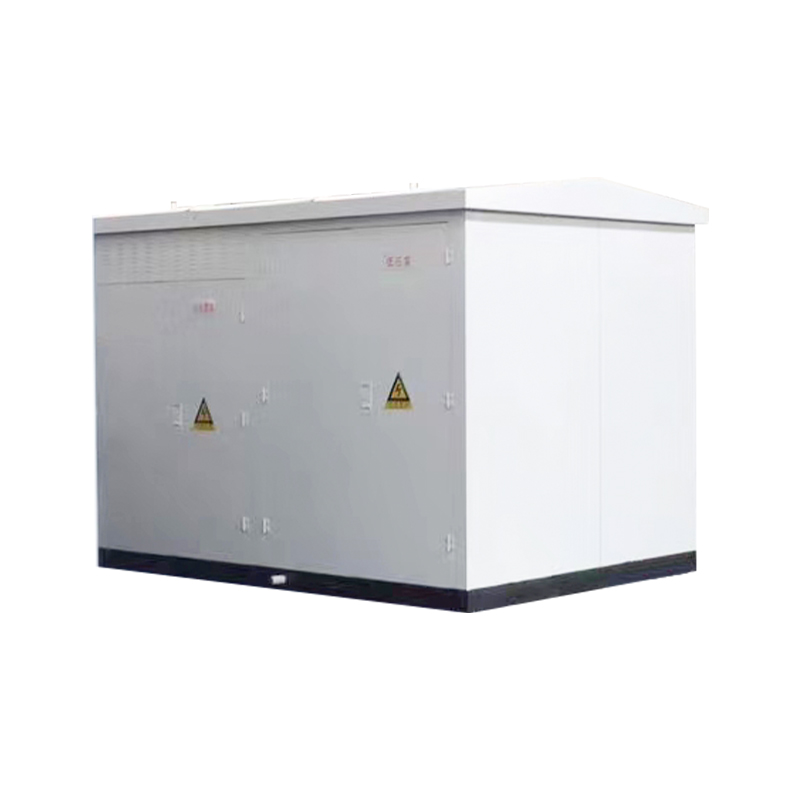
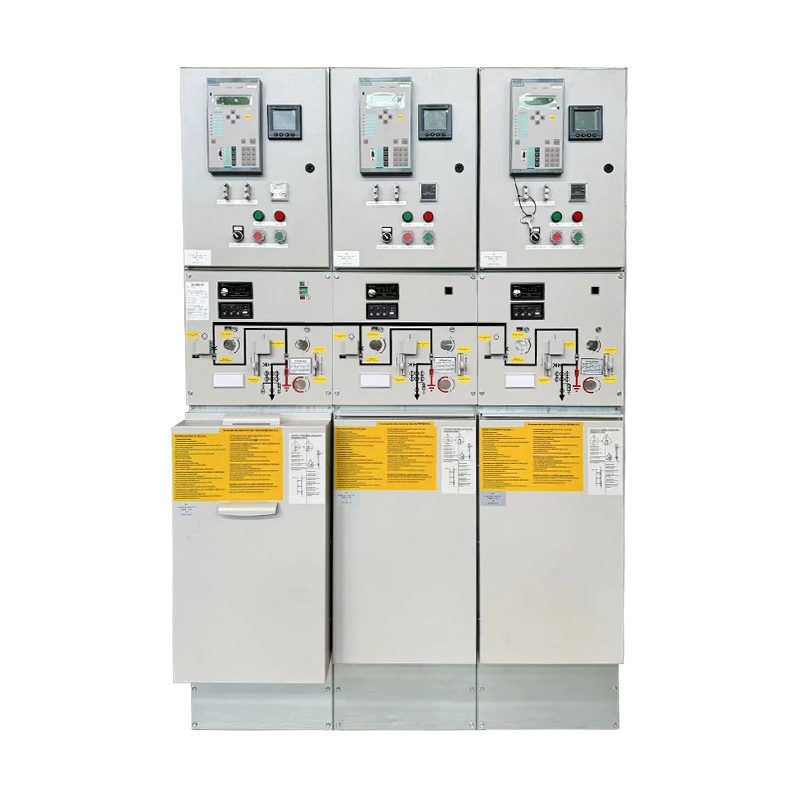
A Cabinet-Type Outdoor Prefabricated Substation, which is a compact, all-in-one electrical distribution solution designed for outdoor installation. Th...
See Details
Copyright © Jiangsu Dingxin Electric Co., Ltd. Rights Reserved.

Energy Efficient Transformers Manufacturers Electrical Transformers Factory
Contact Us