 English
 русский
 Español
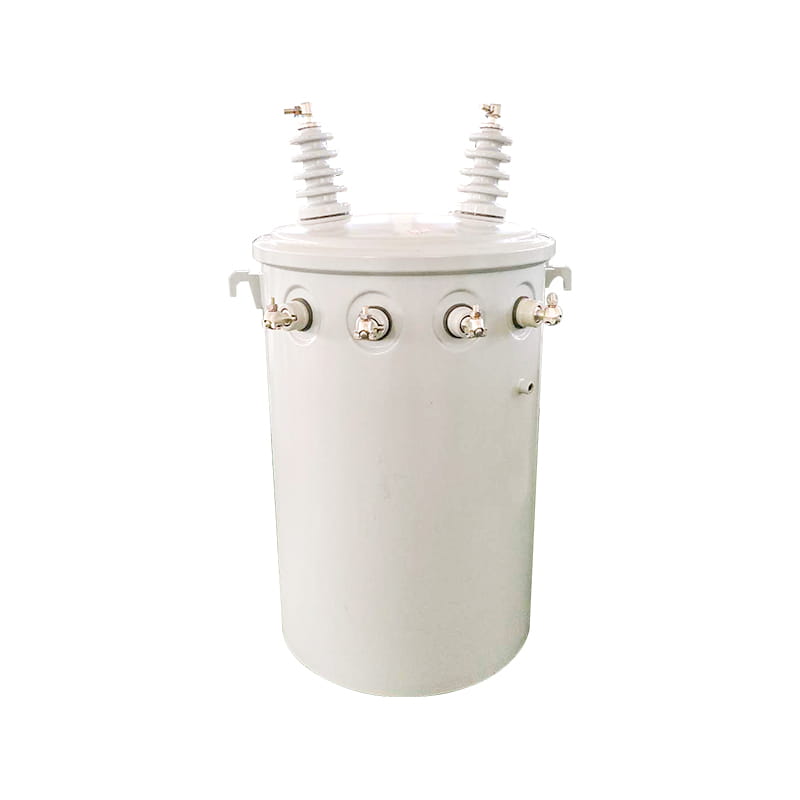
Energy-Saving Single-Phase Oil-Immersed Pole-Mounted Transformer
15KVA 13.8KV/0.4KV
See Details
Content
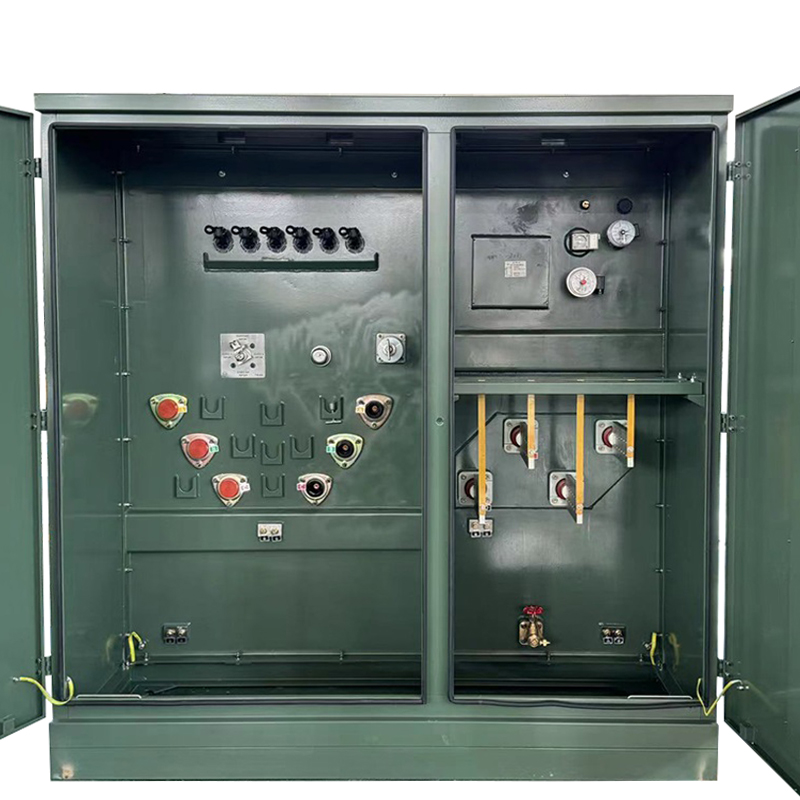
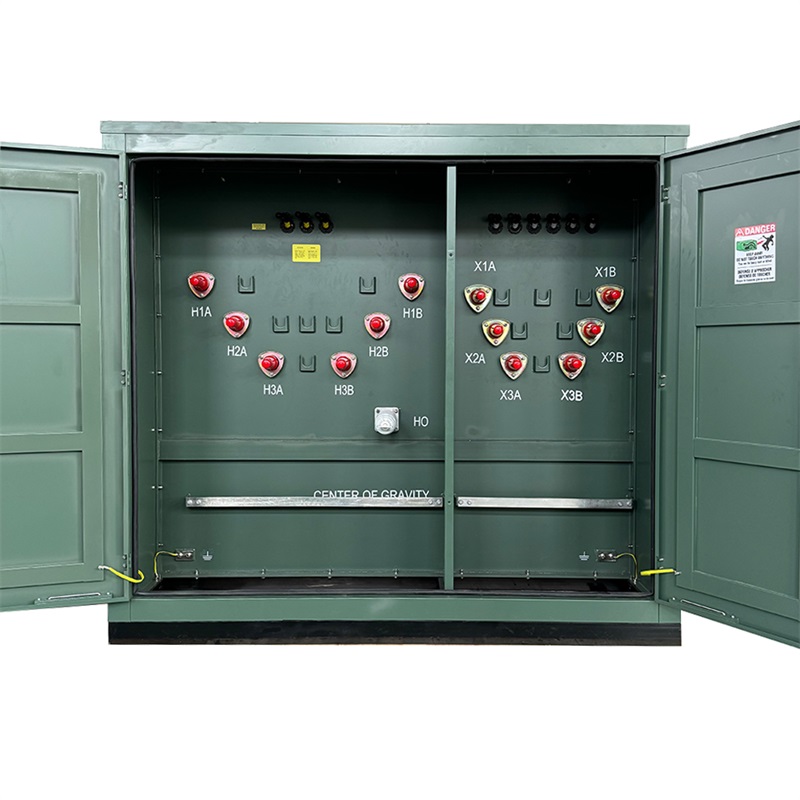
A pad mounted transformer is an outdoor, ground-level distribution transformer installed on a concrete (or engineered) pad to step medium voltage down to utilization voltage for end users. It is widely selected for urban public distribution, high-rise buildings, residential communities, industrial and mining enterprises, ports, oil fields, parks, stations, airports, subways, and highway service areas because it keeps equipment compact, accessible for maintenance, and safer for public environments.
In practical procurement, the starting point is confirming the electrical window you need. Typical pad-mounted solutions cover a broad span of ratings and insulation levels, from 45 kVA up to 12,000 kVA, primary voltage from 2.4 kV to 46 kV, secondary voltage from 120 V to 24.94 kV, and BIL from 30 kV to 250 kV. For an overview of available configurations, you can reference our pad mounted transformer product range.
| Parameter | What to specify | Why it matters |
|---|---|---|
| kVA rating | Demand, diversity, and growth allowance | Avoids overheating, nuisance protection trips, and short life |
| Primary / secondary voltage | Nominal voltages plus tap range | Ensures voltage regulation across feeder variation |
| BIL / insulation level | Lightning impulse level and insulation coordination | Reduces surge-related failure risk |
| Cooling & insulation | Liquid-filled (commonly ONAN) or project requirement | Impacts losses, overload capability, and maintenance |
| Feed type | Radial vs loop/ring network | Determines switching arrangement, reliability, and cable routing |
Oversizing increases capital cost and can increase no-load energy consumption, while undersizing accelerates thermal aging and increases outage risk. A practical approach is to size from measured load (or engineered estimates), then add a defined growth margin based on your expansion plan rather than a generic percentage.
Losses are usually split into no-load loss (core loss, present 24/7) and load loss (copper and stray losses, proportional to current). Even when two bids meet the same kVA and voltage, the loss profile can change lifecycle cost materially.
| Example model | Capacity (kVA) | No-load loss (W) | Load loss (W) | No-load energy / year (kWh) |
|---|---|---|---|---|
| ZGS13-H-500/10 | 500 | 480 | 5150 | 0.48 × 8760 = 4205 |
| ZGS13-H-1000/10 | 1000 | 830 | 10300 | 0.83 × 8760 = 7271 |
| ZGS13-H-1600/10 | 1600 | 1170 | 14500 | 1.17 × 8760 = 10249 |
A simple decision rule is to treat no-load loss as a fixed annual cost and load loss as a variable cost. For example, if electricity is $0.10/kWh, the 500 kVA example’s no-load loss alone corresponds to about $420/year (4205 kWh × $0.10), before considering load loss. This is why selecting an appropriate kVA rating and efficiency level is not only an engineering choice, but also an operating expense decision.
Because a pad mounted transformer is typically installed at ground level, enclosure and access control are not optional details. A robust design focuses on preventing unauthorized access, maintaining insulation integrity under weather exposure, and managing leak risk in liquid-filled units.
From a buyer’s perspective, the key is to specify the environment (corrosive atmosphere, UV exposure, flooding risk, public access level) early in the inquiry. Otherwise, suppliers will quote different “baseline” assumptions, and you may end up comparing non-equivalent offers.
Most commissioning issues trace back to site preparation rather than transformer design. A pad mounted transformer needs a stable foundation, correct clearances, correct grounding, and drainage control. If these are not implemented, even a correctly manufactured unit can experience accelerated corrosion, moisture intrusion, overheating, or unsafe access conditions.
For European-style compact arrangements commonly used in integrated substations, typical environmental assumptions often include altitude not exceeding 1000 m, ambient temperature range -30℃ to +40℃, and relative humidity not exceeding 90% at 25℃. If your site exceeds these conditions (high altitude, high ambient, flooding, high salinity), it should be stated at RFQ stage so the design margins are deliberate rather than accidental.
“American” and “European” styles usually describe different integration and application conventions rather than a single technical advantage. The right choice depends on your network topology, switching practices, and footprint constraints. If you are sourcing for a specific regional grid practice, it is often best to review the relevant category directly: American pad mounted transformer or European pad mounted transformer.
| Selection factor | When American style fits well | When European style fits well |
|---|---|---|
| Network topology | Projects aligned to ANSI/IEEE utility practices and common North American conventions | Projects aligned to IEC/CENELEC conventions and integrated compact substation layouts |
| Footprint planning | When pad space is available and cable routing is straightforward | When you want a compact combination of HV equipment, transformer, and LV equipment in one enclosure |
| Typical reference sizes | Sized by kVA and switching arrangement; verify clearance and service access | Reference footprints include 2800×1800×2560 mm (50–250 kVA, terminal no corridor) up to 3800×2400×2560 mm (800–1600 kVA, terminal no corridor) |
Recommendation: if your project is governed by a utility or EPC standard, treat that document as the controlling requirement and align the transformer category accordingly. If the standard is not yet fixed, decide based on available pad space, switching and metering integration, and local maintenance practice.
To keep quotations comparable and avoid scope changes after award, provide a complete RFQ package. From a manufacturer’s perspective, missing details most often cause re-quoting, redesign lead time, or site mismatch issues.
When these inputs are defined, you are much more likely to receive quotations that are technically equivalent, allowing you to compare on real value: lifecycle losses, enclosure durability, maintainability, and delivery capability.
A pad mounted transformer is a long-life asset, so supplier qualification should be more than price comparison. A practical evaluation includes production capacity, quality systems, test evidence, export experience, and the ability to support your required standards and documentation.
Our manufacturing base focuses on medium-voltage and low-voltage power equipment and supplies pad mounted transformer solutions for utility, industrial, and infrastructure projects. With an annual production capacity of 50 million kVA and established management system certifications (including ISO9001, ISO14001, and ISO45001), we support OEM/ODM requirements while keeping the engineering discussion focused on fit-for-purpose design rather than generic catalog selection.
Next step: if you share your kVA, voltage combination, feed type (radial/loop), and site environment, a manufacturer can quickly confirm a configuration, footprint assumptions, and an appropriate loss/efficiency target for your operating profile.

Copyright © Jiangsu Dingxin Electric Co., Ltd. Rights Reserved.

Energy Efficient Transformers Manufacturers Electrical Transformers Factory
Contact Us