 English
 русский
 Español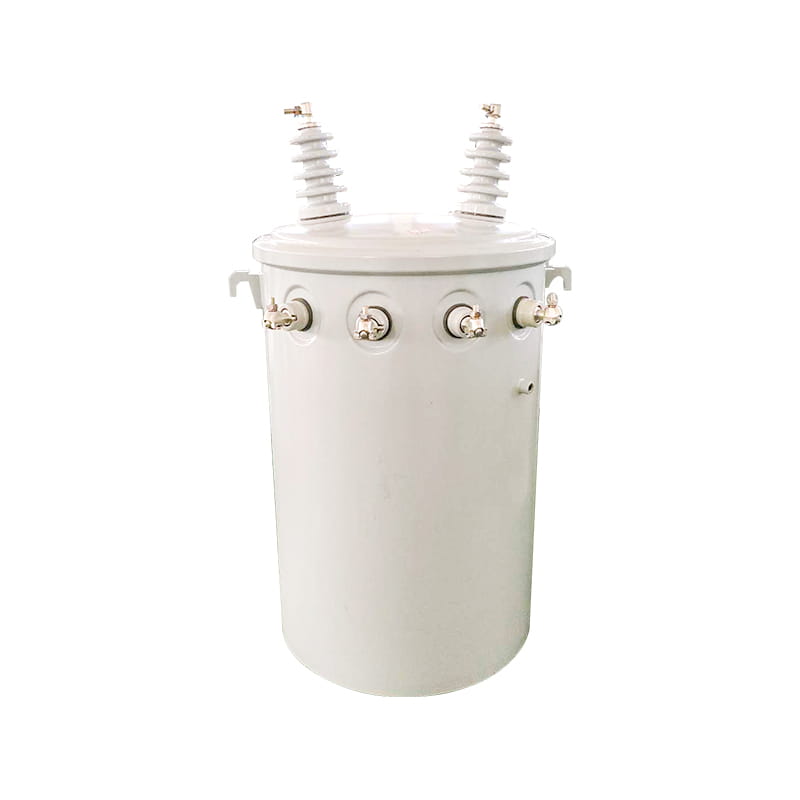
Energy-Saving Single-Phase Oil-Immersed Pole-Mounted Transformer
15KVA 13.8KV/0.4KV
See Details
Content
Over 80% of large power transformers installed in the United States are imported. The average lead time for a new unit has stretched to 120 weeks — double what it was just three years ago. That’s a direct finding from the National Infrastructure Advisory Council (NIAC), and it spells trouble for utilities, data center operators, and renewable energy developers. Grid expansion projects are stalling. Transformer plant capacity on U.S. soil simply hasn’t kept pace with a 2.5% annual rise in electricity demand projected by the IEA through 2026.
Why such extreme delays? Transformer manufacturing is skill-intensive and capital-heavy. A single large power transformer requires specialized winding equipment, vacuum drying ovens, and large-capacity lifting cranes. Most global production remains concentrated in a handful of countries. Meanwhile, domestic demand is surging — driven by electrification, data center construction, and the integration of intermittent renewable sources that require additional voltage transformation steps. Data center electricity consumption alone could double by 2030, adding enormous pressure. Without new transformer plant investments, the backlog would only worsen.
The response is a wave of capital commitments that together exceed $500 million. Here are the five most significant transformer plant projects reshaping the landscape:
| Company | Investment | Location | Product Focus | Expected Online |
|---|---|---|---|---|
| Eaton | $340 million | Jonesville, SC | Three-phase distribution transformers | 2027 |
| Cleveland-Cliffs | $150 million | Weirton, WV | Three-phase distribution transformers (GOES core) | H1 2026 |
| Siemens Energy | Undisclosed expansion | Charlotte, NC | Large power transformers (LPTs) & service | Phased from 2025 |
| WEG Transformers USA | Ongoing capacity increase | Washington, MO (3 sites) | Distribution and power transformers up to 100 MVA | Ongoing |
| MEPPI (Mitsubishi Electric) | Existing facility; service expansion | Memphis, TN | Heavy electrical equipment, including power transformers | Operational |
Eaton’s Jonesville plant will convert an existing facility, targeting a 2027 start date. Cleveland-Cliffs is repurposing a former tinplate warehouse in Weirton, leveraging its own grain-oriented electrical steel (GOES) to produce cores on-site. Siemens Energy’s Charlotte expansion covers the complete transformer lifecycle — from winding and assembly to testing and field service — for units up to 500 MVA. These projects follow months of debate in Washington about supply chain resilience and the need for domestic transformer manufacturing.
Not all transformers are equal, and the new U.S. transformer plant capacity splits neatly into two categories: distribution and large power. Understanding the technical differences is essential for procurement teams evaluating domestic sourcing options.
| Parameter | Distribution Transformer | Large Power Transformer (LPT) |
|---|---|---|
| Voltage Class | Typically ≤35 kV | 69 kV and above |
| Capacity Range | Up to 10 MVA | Typically >10 MVA, often 50–500 MVA |
| Core Material | GOES or amorphous steel | GOES (high-permeability, domain-refined) |
| Winding Type | Layer or disc; often aluminum or copper | Interleaved disc, continuous disc; predominantly copper |
| Cooling | ONAN (oil natural air natural) | OFAF, ODAF (forced oil and air) |
| Manufacturing Floor Space | Smaller, modular assembly lines | Requires high-bay, heavy-lift cranes |
Eaton and Cleveland-Cliffs are squarely focused on three-phase distribution units — the workhorses of utility grids and commercial installations. These transformers will meet the latest DOE efficiency standards, finalized in 2025, which effectively mandate lower-loss cores. Cleveland-Cliffs’ Weirton plant has a clear advantage: direct access to domestically produced GOES, a silicon-steel alloy with highly oriented magnetic grains that reduces no-load losses. Amorphous metal cores, while even more efficient, remain more costly and are currently produced primarily in Asia.
Siemens Energy’s Charlotte facility handles a different beast. Large power transformers require multi-ton core lifting, precise winding under controlled humidity, and extensive factory testing including impulse voltage withstand. The expansion brings that capability to the continental U.S., reducing the exposure to overseas shipping risks and port bottlenecks that have plagued LPT deliveries.
The U.S. Department of Energy’s updated efficiency standards for distribution transformers take full effect in 2026 and raise minimum efficiency by tightening allowable no-load and load losses. To meet these levels, manufacturers choose between domain-refined GOES and amorphous steel. High-grade GOES, such as laser-scribed grades produced domestically, delivers losses around 0.3–0.5 W/kg at 1.5 Tesla while remaining cost-competitive. Amorphous metal can cut core losses by up to 70% but demands specialized fabrication and carries a premium. Cleveland‑Cliffs designed its new transformer plant around GOES, ensuring ready compliance.
For buyers of cast-resin dry-type transformers — often used indoors, near data halls, or in environmentally sensitive areas — these new domestic plants do not yet add capacity. Global suppliers filling that niche include manufacturers with established oil-immersed transformer lines that complement dry-type production, giving them a broad portfolio.
Transformer plant location decisions are never accidental. Three factors dominate: raw material access, workforce availability, and logistics. Weirton, West Virginia, embodies the raw material play. Cleveland-Cliffs operates the only domestic GOES production line in Butler, Pennsylvania — less than 100 miles away. By co-locating transformer core stamping and winding alongside its steel mill network, Cliffs shortens the supply chain to hours, not weeks. A $50 million forgivable loan from West Virginia sweetened the deal and underscores the state’s appetite for re-industrialization.
Eaton’s Jonesville, South Carolina choice is a brownfield conversion. An existing industrial building reduces construction time and capital, allowing the company to focus its $340 million on winding machines, ovens, and testing equipment rather than site development. South Carolina’s labor market offers operational flexibility, though the company states it will hire up to 700 workers at competitive wages.
Charlotte, North Carolina, gives Siemens Energy proximity to a deep labor pool of skilled electrical tradespeople — a legacy of the region’s energy-sector presence — and a logistics hub with access to East Coast ports. For LPTs that weigh hundreds of tons and require specialized rail or barge transport, highway and railroad connectivity is non-negotiable. The Charlotte plant also houses a service center, enabling repair and retrofit work that further shortens customer downtime.
These site decisions starkly mirror the choices global manufacturers make. A production base in China’s transformer manufacturing corridor, for example, leverages massive annual output — some factories exceed 50 million kVA — to serve multiple export markets. That scale often compresses unit costs, but it introduces shipping logistics and tariff layers absent from domestic build.
New transformer plant announcements are reshaping procurement calculations, but they won't eliminate the role of imports overnight. A realistic view requires comparing total cost of ownership (TCO), not just sticker price.
| Cost Factor | New US Plant (Post-Ramp) | Import (e.g., from China) |
|---|---|---|
| Base Unit Price | Higher (labor, smaller scale initially) | 10–25% lower on average |
| Lead Time (Standard Product) | 30–40 weeks (estimated after ramp) | 12–20 weeks (with sea freight) |
| Custom Engineering | Limited initially; standard ratings | Extensive; voltage, cooling, insulation options |
| Import Tariff | None | 25% Section 301 tariff on many transformer categories |
| Certification & Standards | ANSI/IEEE, UL; DOE compliant | IEC; some units dual-certified ANSI |
| Warranty & Service | Local, faster response | Manufacturer service network, spare parts lead time |
| Freight & Logistics | Truck or rail within U.S. | Ocean freight + inland transport; port congestion risk |
Chinese transformer manufacturers have spent two decades building capacity to supply markets in the Middle East, Europe, and Africa. Companies operating large-scale factories produce everything from 35kV oil-immersed distribution units to 220kV power transformers under a single roof. A single facility can ship 20,000 units per year, with standardized designs that mirror ANSI dimensions for the U.S. market. Their ability to ship a fully tested pad-mounted transformer within 14 weeks can be decisive for a data center startup facing a tight schedule. However, the 25% tariff, if applicable, often narrows the price gap, and domestic U.S. content requirements for federally funded infrastructure projects push utilities toward local sourcing.
Siemens Energy’s LPT expansion addresses the most vulnerable segment. Before this facility reaches full capacity, a U.S. utility ordering a 345-kV grid autotransformer might still face a 150-week wait if sourced globally. By insulating against shipping disruptions and adding service capability, the Charlotte plant lowers risk premiums on large capital projects.
One overlooked advantage of the new domestic transformer plants is standardization. Utilities across the U.S. have long tolerated a wide variety of designs. Consolidated production lines with focused voltage/kVA ratings could improve reliability and reduce spare-part inventories — an outcome that benefits the entire grid.
The next three years will be transitional. New domestic transformer plant output will ramp gradually while international supply chains stabilize. Procurement teams need a dynamic strategy that matches project risk profiles to supplier capabilities.
| Scenario | Recommended Source | Rationale |
|---|---|---|
| Urgent data center expansion (1–3 MVA) | Stocked import or fast-track domestic if available | Speed is critical; many Asian suppliers hold inventory |
| Federal infrastructure upgrade (distribution) | Domestic transformer plant | Buy America compliance, shorter service loops |
| Large transmission grid project (100+ MVA) | Siemens Energy Charlotte (once ramped) or international with advance order | Long lead times need early procurement; dual-certified imports viable |
| Renewable energy collector substation | Global supplier with wind/solar experience | Customization for harmonic filtering, voltage range |
Utilities that lock in multi-year supply agreements with the new plants will secure capacity before lead times tighten again. For bulk procurement of standard pad-mounted and pole-mounted units, a hybrid approach — using domestic production for base load and imports for peak demand — offers the best of both worlds. Factory-trained service engineers become critical; a domestic plant with on-call teams can drastically reduce the risk of extended outages.

Copyright © Jiangsu Dingxin Electric Co., Ltd. Rights Reserved.

Energy Efficient Transformers Manufacturers Electrical Transformers Factory
Contact Us