 English
 русский
 Español
Energy-Saving Single-Phase Oil-Immersed Pole-Mounted Transformer
15KVA 13.8KV/0.4KV
See Details
Content
A 50kVA single-phase pole-mounted transformer is a practical workhorse for rural electrification, but it is not a fit-and-forget number. The right question is not simply “is 50kVA enough?” It is whether 50kVA matches the diversified demand, voltage profile, motor-starting behavior, and future growth of the households, farms, shops, and small enterprises on that feeder. This guide walks through the sizing checks we would want to see before a rural project commits to a 50kVA pole-mounted unit.
Rural distribution points rarely look like a single large industrial load. They tend to serve a cluster of small customers over a long, lightly loaded feeder. A 50kVA single-phase pole-mounted transformer can be a good match when the diversified load is modest, the primary voltage is available at the pole, and the low-voltage run is not already stretched by voltage drop. In many rural schemes, this rating offers a useful balance: enough capacity for a hamlet, a water pump, a small agro-processing load, and a few shops, without the no-load losses and physical weight of a much larger unit.
 50kVA Single-Phase Pole-Mounted Oil-Immersed TransformerFor rural distribution clusters with modest diversified load, this 50kVA pole-mounted unit offers single-phase capacity for hamlets, pumps, small shops, and agro-processing.View Product →
The rating is also familiar to utilities and contractors, which can simplify spares, protection coordination, and pole hardware. Still, familiarity is not a sizing method. A 50kVA unit can be badly oversized for a handful of households and badly undersized for an irrigation cluster with several high-starting-current motors. The calculation and field checks below matter more than the nameplate alone.
Before calculating kVA, list every load that the pole-mounted transformer is expected to supply. For rural electrification, that list often includes:
For each item, record the rated kW, power factor, hours of use, and whether it has a high starting current. A pump motor may draw several times its running current for a few seconds; a cluster of motors starting during the same irrigation window can influence the transformer size more than the steady-state kW total suggests. If actual data are unavailable, use measured bills, utility records, or a short load survey rather than relying on generic assumptions.
Not every connected load operates at the same time. Diversity, or demand factor, recognizes that household peaks are staggered and that rural load varies by season and time of day. A common planning approach is to build the connected load, apply a realistic diversity factor, and then convert the diversified kW to kVA using the expected power factor. For a single-phase transformer, the basic relationship is:
kVA = kW ÷ power factor
If the load inventory is already in kVA, add the kVA values directly and adjust for diversity. For mixed loads, calculate a weighted power factor rather than applying one optimistic value to everything. Household-dominated clusters often have a power factor that is lower than engineers expect because of lightly loaded motors and electronic loads, while irrigation and workshop loads can pull the power factor down further. The transformer must carry both real power and reactive power, so the kVA result is the number that matters for rating.
A 50kVA transformer at 0.85 power factor can deliver about 42.5kW of real power at full load. If the planning target is to operate below nameplate to preserve thermal margin, the usable diversified demand is lower. That is why a seemingly small load list can still exhaust a 50kVA unit once diversity is applied honestly and starting currents are considered.
| Check | Example | Why it matters |
|---|---|---|
| Full-load current | About 208A at 240V secondary | Confirms secondary cable, fuse, and connection ratings |
| Real power at 0.85 PF | About 42.5kW at 50kVA | Shows the useful load behind the kVA rating |
| Planning load | 35–40kVA after diversity | Leaves some margin for growth and motor starting |
| Voltage drop | Check the farthest customer, not just the pole | Long rural low-voltage runs can set the limit before kVA does |
A transformer can be correctly rated and still deliver poor voltage at the end of a rural feeder. The low-voltage run from the pole to the farthest customer may be long, lightly loaded, and exposed to unbalanced single-phase connections. Calculate voltage drop using the expected peak current, conductor resistance and reactance, and the actual route length. Then check the voltage at the customer terminals, not only at the transformer secondary.
Motor starting deserves a separate check. A 50kVA unit may carry the running load comfortably but still produce a noticeable dip when a pump starts, especially if the feeder is weak or the motor is large relative to the transformer. Voltage dips can trip contactors, disturb refrigeration, and shorten motor life. If the project includes irrigation or agro-processing, obtain motor starting data and compare it with the transformer impedance and feeder strength. In some cases, a larger transformer is not the best answer; improving the low-voltage conductor, reducing the motor starting load, or using soft-start equipment may be more effective.
A pole-mounted transformer lives in the weather. Direct sun, high ambient temperature, restricted ventilation, dust, and altitude all affect heat rejection. The nameplate rating assumes a defined set of conditions, so check the manufacturer’s derating curves when the site is hotter than the reference ambient or installed in a sheltered location. A 50kVA unit that is fully loaded at mild ambient may need to be loaded more conservatively during a hot season.
Installation details also matter. The pole must carry the weight and wind load with the required clearance. The transformer should be mounted so that air can move around the tank, with room for inspection and fuse access. In coastal or polluted areas, specify suitable paint, bushings, and hardware. For rural sites, lightning and surge exposure are often more significant than the continuous load itself, so surge arresters and grounding must be designed as part of the installation rather than added later.
Sizing is only complete when protection matches the transformer and the load. The primary fuse or recloser must clear faults without nuisance operation during normal motor starting and transformer energization. The secondary protection must protect the low-voltage cable and the customer service equipment. Grounding must follow local rules and utility standards, with particular attention to rural installations where earth resistivity may be high.
Single-phase pole-mounted transformers are often connected to one phase of a three-phase rural feeder. That is normal, but it creates phase imbalance. If several 50kVA units are distributed along the same feeder, review which phase each unit connects to and how the loads vary during the day. A transformer that looks lightly loaded on paper may be on the most heavily loaded phase. Phase balance, rather than individual transformer kVA, can become the limiting factor for voltage regulation and losses.
Document the assumptions. Rural load growth can be uneven: a village may stay stable for years and then add a pump, a mill, or a small cold store. The sizing record should show what was included, what was excluded, and how much spare capacity remains. That record is useful when the utility reviews the next connection request.
A 50kVA transformer is too small when the diversified demand is already close to its practical loading limit, when several motors start together, or when voltage drop at the farthest customer is unacceptable. It is too large when the connected load is a few households and the no-load loss, weight, and protection settings become disproportionate. In those cases, a smaller single-phase unit, a different pole location, or a three-phase solution may be more appropriate.
The decision is not only technical. It affects outage restoration, spares, and the cost of extending service. If you are planning a rural feeder with mixed household and agricultural loads, our article on transforming rural infrastructure with single-phase transformers provides additional context on how these units fit into rural networks.
Once the 50kVA rating is confirmed, compare the details that determine service life: loss levels, impedance, temperature rise, insulation system, tank finish, bushing arrangement, and test reports. In rural service, energy-saving designs can be attractive because the transformer may run for many years at light load. A low-loss single-phase pole-mounted unit can reduce no-load losses while still providing the required capacity, but the specification should match the utility’s loss evaluation method and not just the initial price.
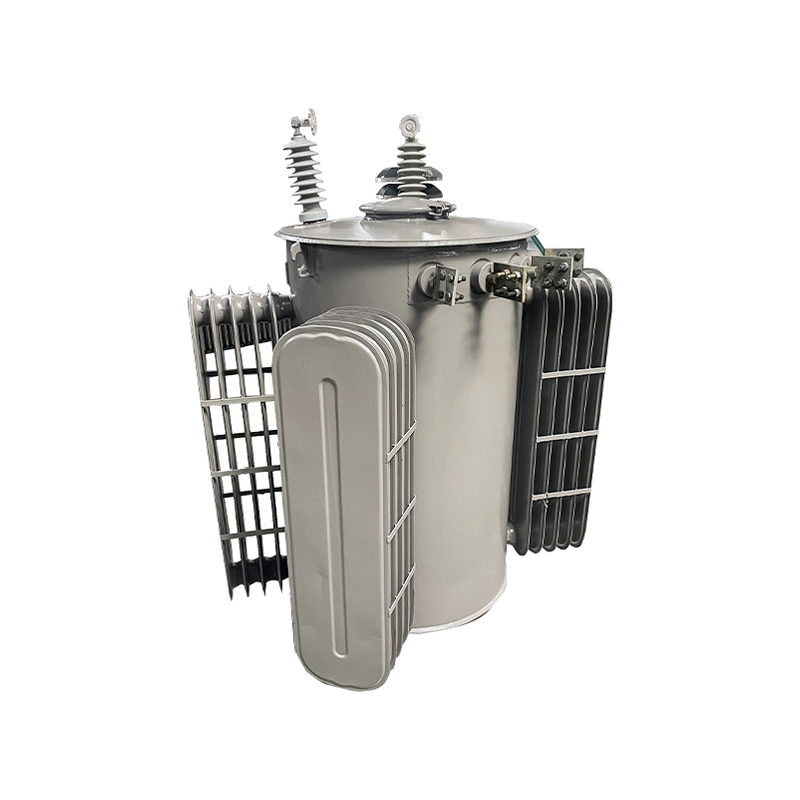 Energy-Saving 15kVA Single-Phase Pole-Mounted TransformerFor single-phase distribution where loss evaluation matters, this 15kVA oil-immersed pole-mounted model uses high-grade silicon steel to reduce core losses.View Product →
Ask for routine tests, loss data, impedance, connection diagram, and mounting details. Confirm the primary and secondary voltages, tap arrangement, frequency, and applicable standards. For projects with long delivery chains, agree on inspection, packing, and documentation before shipment. These points are not marketing extras; they are the information the installation crew and maintenance team will rely on for the next twenty years.
Use 50kVA as a candidate rating, not an assumption. Start with measured or surveyed load, apply diversity and power factor honestly, check voltage drop and motor starting, then derate for site conditions. When the numbers fit, a 50kVA single-phase pole-mounted transformer is a capable and economical rural electrification asset. When they do not, changing the transformer size without checking conductors, protection, and phase balance usually moves the problem rather than solving it. If you have a load schedule and site conditions, send us the details and we can help review the practical fit.

Copyright © Jiangsu Dingxin Electric Co., Ltd. Rights Reserved.

Energy Efficient Transformers Manufacturers Electrical Transformers Factory
Contact Us